
- What Does It Mean When a Potato Sprouts?
- Are Sprouted Potatoes Safe to Eat?
- Can You Eat Potatoes That Have Sprouted?
- How to Tell If Sprouted Potatoes Are Still Safe to Eat?
- How to Safely Prepare Sprouted Potatoes?
- When Should You Just Throw Them Away?
- Common Myths vs. Facts About Sprouted Potatoes
- Should You Worry About Eating a Sprouted Potato Once?
- Conclusion – Can You Eat Sprouted Potatoes?
It’s a common kitchen dilemma: you pull out a few potatoes and notice little white or green shoots poking out.
Your first thought might be, can you eat potatoes that have sprouted? Is it safe to simply cut off the sprouts and use them? Or should you throw the whole thing away?
This article explores everything you need to know about sprouted potatoes, including whether they’re safe to eat, how to assess their condition, and how to prepare them safely if they’re still usable.
Whether you’ve asked yourself, is it safe to eat potatoes that have sprouted, or are sprouted potatoes safe to eat, this guide will provide clear, evidence-based answers.
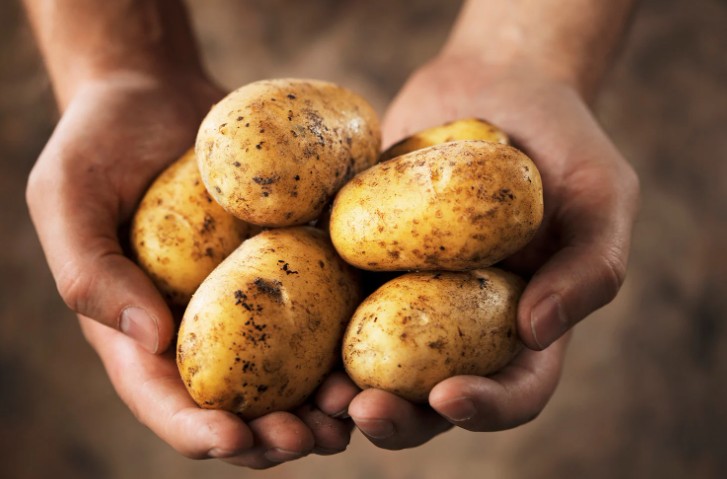
What Does It Mean When a Potato Sprouts?
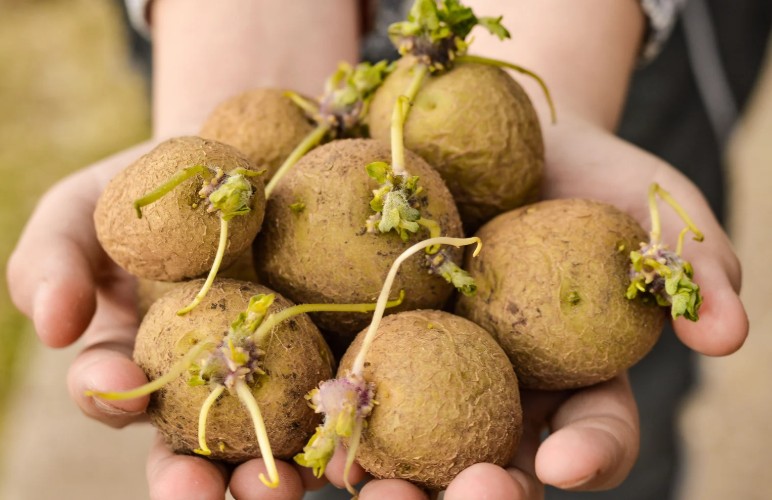
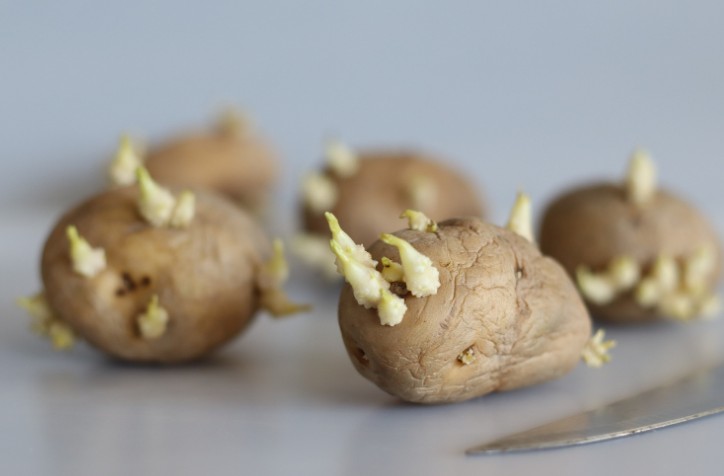
Sprouting is a natural part of a potato’s life cycle. When stored for too long—especially in warm, bright, or humid environments—potatoes begin to grow new shoots, often called “eyes.” These sprouts are the early signs of the potato attempting to grow into a new plant.
This happens because potatoes are tubers, which means they are storage organs for the plant.
They naturally contain nutrients that support sprout growth when the conditions are right. While sprouting itself isn’t harmful, it does signal changes in the potato’s chemical composition, particularly in relation to toxins like solanine.
Sprouting may also be accompanied by greening of the skin, shrivelling, or soft spots—all of which can affect whether the potato is safe to eat.
That’s why it’s important to understand the difference between a harmless sprout and a health hazard.
Are Sprouted Potatoes Safe to Eat?
The short answer is: sometimes. But caution is essential.
When a potato sprouts, the levels of naturally occurring toxic compounds known as glycoalkaloids—especially solanine and chaconine—tend to increase. These compounds are found mainly in the sprouts, skin, and any green parts of the potato.
While small amounts of glycoalkaloids may not cause noticeable harm, higher concentrations can lead to digestive and neurological symptoms.
It’s worth noting that sprouting alone doesn’t necessarily make a potato dangerous. If the sprouts are small and the potato is still firm with no green discolouration, it may be safe to eat after careful preparation.
However, if the potato shows signs of greening, softness, or extensive sprouting, the level of glycoalkaloids could be high enough to cause health issues.
So, if you’re wondering, are sprouting potatoes safe to eat, the answer depends on their overall condition. We’ll cover how to evaluate that next.
Can You Eat Potatoes That Have Sprouted?
What Happens If You Eat Potatoes That Have Sprouted?
If you accidentally eat a sprouted potato, especially one with green skin or a bitter taste, you could be ingesting higher levels of solanine.
This glycoalkaloid acts as a natural pesticide for the potato plant but can be harmful to humans in large quantities.
Symptoms of solanine poisoning can include:
- Nausea and vomiting
- Diarrhoea or stomach cramps
- Headaches and dizziness
- In rare cases, hallucinations or neurological effects
The severity of symptoms depends on how much solanine is consumed and the individual’s sensitivity.
In most cases, minor exposure won’t cause long-term harm, but it’s not something to ignore. Children, older adults, and those with underlying health conditions may be more at risk.
It’s important to remember that solanine is heat-stable, which means cooking does not destroy it. That’s why preparation and inspection are so important.
How to Tell If Sprouted Potatoes Are Still Safe to Eat?
You don’t necessarily need to throw out every potato that starts to sprout. There are some clear indicators that help you decide if a sprouted potato is still safe to use.
Potatoes may be safe to eat if:
- The sprouts are small and can be easily cut away
- The potato is firm to the touch with no signs of shrivelling
- There is no green colouring on the skin or inside the potato
- The flesh looks fresh and smells normal (not bitter or musty)
On the other hand, discard the potato if:
- It’s soft, shrivelled, or wrinkled
- It has turned green, especially under the skin
- There are large or numerous sprouts across the surface
- It smells bitter or has an unpleasant odour
- The flesh has developed a spongy texture
In short, you can eat potatoes that have sprouted only if they still appear healthy and firm. If there’s any doubt, it’s safer to dispose of them.
How to Safely Prepare Sprouted Potatoes?
If your potatoes pass the visual and physical inspection, you can still use them—but preparation is key to ensuring safety.
Here’s how to prepare sprouted potatoes safely:
- Remove all sprouts completely. Use a knife to cut them away, making sure none of the root or eye remains.
- Peel the skin thoroughly. Focus on any green areas and cut them out entirely, as they contain the highest concentrations of toxins.
- Inspect the flesh. If it’s discoloured, soft, or smells off, discard the potato.
- Cook thoroughly. Baking, boiling, or roasting at high temperatures will not remove toxins but may help reduce bacterial risk.
Even after preparation, if the potato tastes bitter, do not eat it. That bitterness can be a sign of high glycoalkaloid content.
When Should You Just Throw Them Away?
While some sprouted potatoes can be salvaged, there are clear situations when you should not take the risk. Eating heavily sprouted or green potatoes is not recommended.
You should throw away sprouted potatoes if:
- They’re soft, mushy, or look dehydrated
- There’s visible green colouration on large parts of the skin or flesh
- The sprouts are long, thick, or have covered much of the surface
- The potato has a bitter smell or taste, even after cooking
In these cases, the risk of solanine poisoning increases significantly. It’s better to be safe than sorry—especially considering how affordable and replaceable potatoes are.
Common Myths vs. Facts About Sprouted Potatoes
There’s plenty of confusion about what’s safe when it comes to sprouted potatoes. Let’s clear up a few common myths.
| Myth | Fact |
| Cooking destroys all toxins in potatoes | Solanine is heat-stable and survives typical cooking temperatures |
| A green potato is fine as long as it’s firm | Green areas usually contain higher levels of glycoalkaloids |
| All sprouted potatoes are unsafe | Some can be safe if the sprouts and green parts are removed properly |
| If it smells okay, it’s safe to eat | Toxins may be present even without a noticeable odour |
Understanding these facts can help you make better decisions when dealing with questionable spuds.
Should You Worry About Eating a Sprouted Potato Once?
If you’ve eaten a sprouted potato once—perhaps without noticing the sprouts or green areas—there’s usually no reason to panic.
Most people won’t experience serious side effects from a single exposure, especially if the potato was cooked and didn’t taste bitter.
However, if you feel unwell afterwards or notice symptoms like nausea, vomiting, or stomach pain, it’s worth monitoring your condition and seeking medical advice if necessary.
While rare, cases of solanine poisoning have occurred in the UK and elsewhere from eating improperly stored or sprouted potatoes. That’s why it’s important to stay informed and err on the side of caution.
Conclusion – Can You Eat Sprouted Potatoes?
So, can you eat potatoes that have sprouted? Yes, in some cases. But you need to be careful.
If the potato is still firm, shows no green colouring, and the sprouts are small, you can eat it after removing the sprouts and cooking it properly. However, if it’s soft, green, smells bad, or is covered in long sprouts, it’s best to discard it.
The key takeaway is this: while sprouted potatoes can sometimes be safe, they do come with increased health risks.
And since cooking doesn’t eliminate the harmful compounds entirely, it’s important to judge carefully.
Always remember:
- Don’t eat green or bitter-tasting potatoes
- Don’t rely solely on smell or taste to detect danger
- When in doubt, throw it out
Related Article: What to Do With Green Tomatoes? – 5 Best Ways You Can Use Them
0 Comments