
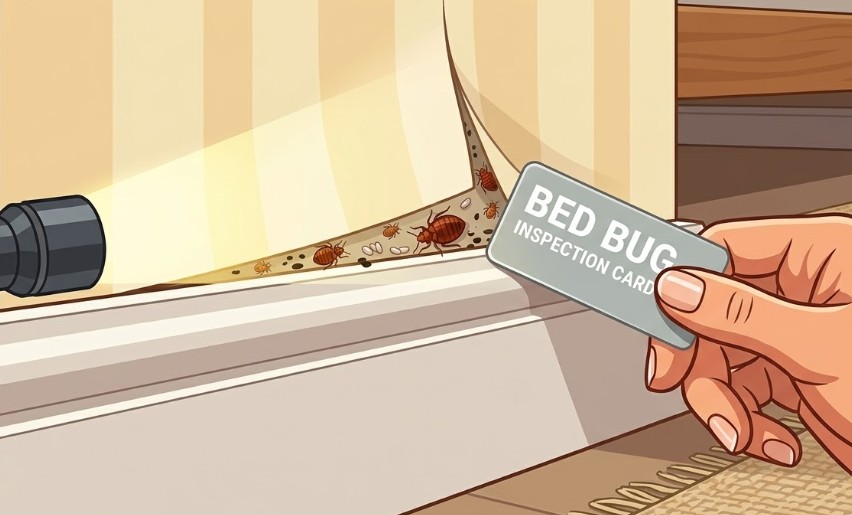
- Quick Note: Where Do Bed Bugs Hide?
- Why Are Bed Bugs Exploding In The UK Right Now?
- The Bedroom Hot Zones: Where Do They Hide Near The Bed?
- The Stealth Spots: Where Do They Hide When The Bed Is Clean?
- For Managers & Renters: The Professional Perspective
- Detecting The Undetectable: Signs You’ve Missed
- Conclusion: Taking Immediate Action
- FAQ About Where Do Bed Bugs Hide
I’ve spent years investigating pest outbreaks in both high-end hotels and residential flats, and if there is one thing I’ve learned, it’s that knowing exactly where do bed bugs hide is the only way to stop an infestation in its tracks.
These pests are master hitchhikers that can turn a “clean” room into a nightmare in hours, and I never check into a hotel room or move into a new rental anymore without performing my 2-minute “credit card” sweep of the headboard—a habit born from a particularly nasty encounter in London that taught me exactly how stealthy these insects can be.
Quick Note: Where Do Bed Bugs Hide?
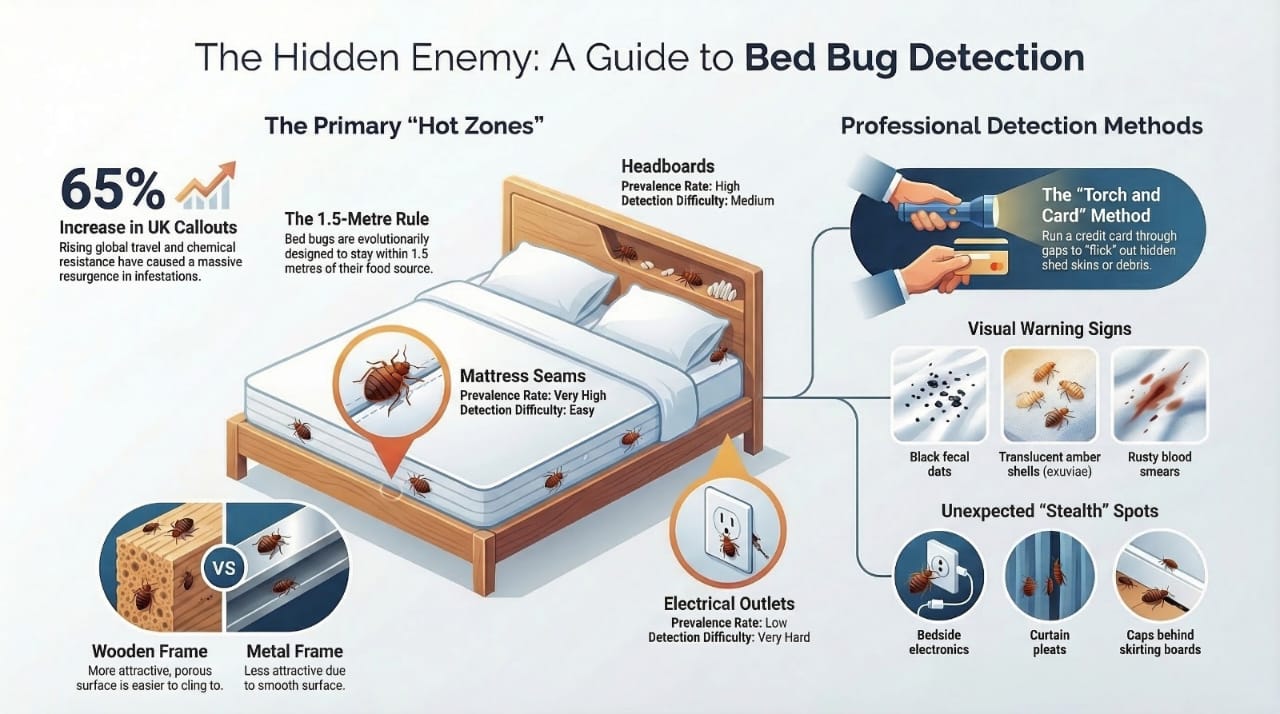
Yes, they hide in more than just beds! Bed bugs are master hitchhikers that primarily stay within 1.5 metres of their host. For a successful inspection, remember:
- • Mattress Seams: Peel back the piping and check the thick fabric edges and tags.
- • Bed Frames & Slats: Inspect wooden joints, screw holes, and dark gaps.
- • Behind Headboards: Check the narrow space between the board and the wall.
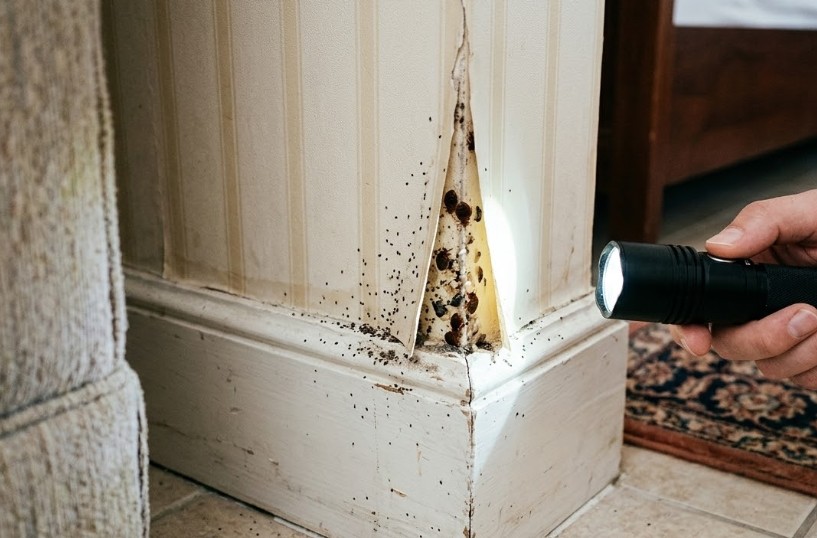
- • Skirting Boards: Look for “stealth” gaps where the flooring meets the wall.
- • Electrical Outlets: They often hide behind faceplates or inside bedside electronics.
Best Signs: Look for Fecal Spotting (black dots) or Shed Skins (translucent shells).
Why Are Bed Bugs Exploding In The UK Right Now?
We are currently seeing a significant resurgence in infestations across the UK. According to recent data from major pest control firms like Rentokil, there has been a nearly 65% year-on-year increase in bed bug callouts.
This is largely due to increased global travel and the pests developing a higher resistance to traditional chemical treatments.
To help you identify the risk levels in your own home or property, I have put together this comparison table of common harborage points.
Table: Bed Bug Hiding Spots And Detection Difficulty
| Hiding Spot Location | Prevalence Rate | Detection Difficulty | Key Sign to Look For |
|---|---|---|---|
| Mattress Seams & Piping | Very High | Easy | Dark fecal spots & eggs |
| Headboard (Rear & Joints) | High | Medium | Shed exoskeletons (skins) |
| Skirting Boards (Clefts) | Medium | Hard | Live bugs (flat/brown) |
| Electrical Outlets | Low | Very Hard | Pale yellow nymph skins |
| Luggage Racks (Hotel) | High | Medium | Movement in strap folds |
The Bedroom Hot Zones: Where Do They Hide Near The Bed?
Why Do Bed Bugs Prefer Your Mattress Seams And Headboards?
The biological name for the bed bug is Cimex lectularius, and they are evolutionarily designed to stay close to their food source (you). They prefer the mattress because the fabric seams offer the perfect “harborage”—a tight space where they feel safe.
I always recommend peeling back the “piping” or the thick fabric edge of the mattress. If you find activity there, you need to know how to get rid of bed bugs in a mattress immediately before the colony expands to the rest of the room.
Can Bed Bugs Hide Inside Your Bed Frame And Slats?
Absolutely. In fact, wooden bed frames are much more attractive to bed bugs than metal ones because wood is more porous and easier to cling to. They will crawl into the tiny gaps where the slats meet the frame or into screw holes.
Pro-Tip #1: The “Torch and Card” Method Don’t just look with your eyes. Take a bright torch and an old credit card (or a thin loyalty card). Run the card through the gaps in the bed frame and the space between the headboard and the wall. If there is an infestation, the card will often “flick” out shed skins or dark debris that wouldn’t otherwise be visible.
The Stealth Spots: Where Do They Hide When The Bed Is Clean?
Could They Be Hiding Behind Your Skirting Boards And Wallpaper?
If you have performed a thorough check of the mattress and found nothing but are still getting bitten, look lower. In the UK, many older properties have gaps between the skirting boards and the floorboards.
Bed bugs can flatten their bodies to the thickness of a piece of paper, allowing them to slide behind the wood during the daylight hours.
Why Are Electrical Outlets And Light Switches A Common “Harborage” Point?
This is a gap in information I see on many ranking sites: bed bugs love the warmth and the hollow nature of electrical boxes. If an infestation is heavy, they will travel through the wall voids via the wiring.
Pro-Tip #2: The “Heat Signature” Check Check your bedside electronics. I have found bed bugs hiding inside the back of alarm clocks, TV vents, and even laptop charging bricks. They are attracted to the steady, low-level heat these devices emit while you sleep.
Are They Hiding In Your Curtains And Soft Furnishings?
Check the “pleats” at the top of your curtains. This is a classic “content gap” spot that people miss. Because curtains are rarely disturbed, they provide a stable environment for bed bugs to lay eggs (which look like tiny, white grains of rice).
For Managers & Renters: The Professional Perspective
Where Do Bed Bugs Hide In Hotels And High-Turnover Rentals?
For hotel managers, the danger zone isn’t just the bed; it’s the luggage rack. Guests often place infested suitcases directly onto these wooden or metal racks.
I’ve seen countless cases where the bugs migrate from the suitcase to the wall-mounted headboard via the luggage stand.
Who Is Responsible For A Bed Bug Infestation In A UK Rental Property?
In the UK, the “Landlord vs Tenant” debate is common. Generally, if the infestation was present at the start of the tenancy, the landlord is responsible for treatment.
However, if you have been in the property for six months and then bring them in via travel, the responsibility often shifts. I always advise checking the “Habitability” clause in your UK tenancy agreement.
Detecting The Undetectable: Signs You’ve Missed
What Do Bed Bug Hiding Spots Actually Look Like?
You aren’t just looking for the bugs themselves. You are looking for:
- Fecal Spots: Digested blood that looks like black permanent marker dots.
- Exuviae: Translucent, amber-coloured “shells” left behind as they grow.
- Blood Smears: Small rusty-coloured stains on sheets where a bug was accidentally crushed.
Pro-Tip #3: The “Sweet Smell” Myth vs. Reality Many blogs claim bed bugs smell like “coriander” or “sweet almonds.” In my experience, you won’t smell a thing unless the infestation is massive. If you do smell something, it’s usually more akin to “rotting raspberries” mixed with dampness. If you smell that, do not sit on the furniture.
Conclusion: Taking Immediate Action
Correctly identifying where do bed bugs hide is 90% of the battle when it comes to reclaiming your home.
If you’ve followed my “Torch and Card” method and found evidence behind your skirting boards or in your mattress seams, do not attempt to treat it with “off-the-shelf” supermarket sprays—this often causes the bugs to scatter into even deeper hiding spots (a phenomenon known as “repellency”).
Instead, contact a professional pest controller who is a member of the British Pest Control Association (BPCA). They have access to the heat treatments and professional-grade insecticides required to reach the stealth spots I’ve outlined today.
If you’re worried about the bill, you can check our breakdown of how much it costs to get rid of bed bugs in the UK to plan your budget for a professional clearance.
FAQ About Where Do Bed Bugs Hide
1. Can bed bugs hide in my clothes?
Yes, but they don’t like to stay on your body like lice. They hide in the seams of clothes left on the floor or in wardrobes. Because items in your wardrobe are often undisturbed, it is crucial to understand if bed bugs can live in clothes and how to treat your laundry to avoid re-infesting your bedroom.
2. Do bed bugs hide in the carpet during the day?
They rarely hide in the middle of a carpeted floor as it is too exposed. However, they frequently hide at the very edge where the carpet meets the wall or under the “gripper” strips.
3. How far will a bed bug travel from its hiding spot to bite?
A bed bug will typically travel 5 to 6 metres to find a meal, though they prefer to stay within 1.5 metres of your head. They are surprisingly fast, moving at a speed similar to an ant.

Home Maintenance and Practical DIY Expert at Hello Mag, bringing years of hands-on Experience to the care of modern living spaces. She specializes in real-world applications, from high-efficiency cleaning systems to restorative home projects that she has personally tested and refined. Her mission is to share practical insights through step-by-step routines, making home upkeep simple, effective, and easy to master.
0 Comments