
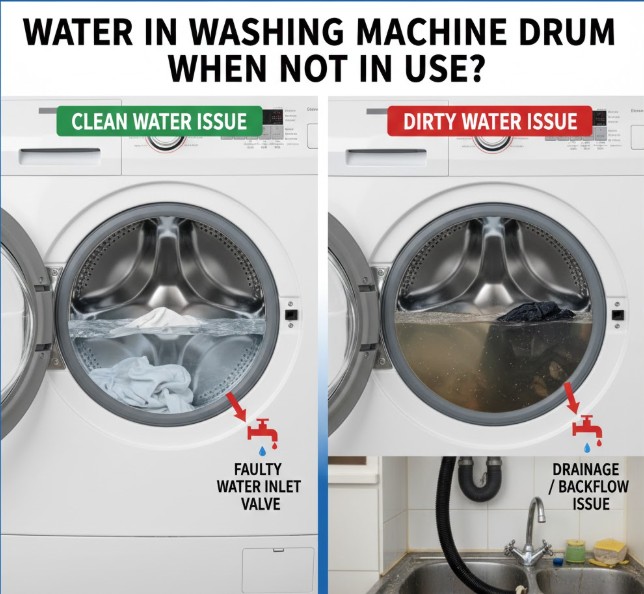
- Water in Washing Machine Drum When Not In Use
- Diagnostic Table: Is Your Water Clean or Dirty?
- Why is Washing Machine Filling With Water When Off?
- Why is Smelly or Dirty Water Appearing in My Washer?
- Can a Blocked Filter Cause Water to "Appear"?
- How Can You Fix This at Home? (Step-by-Step DIY)
- Conclusion
- FAQ about Water in Washing Machine Drum when Not in Use
Water in Washing Machine Drum When Not In Use
Quick Answer: If you find water in your washing machine when it is turned off, the cause depends on the water type. Clean water usually indicates a faulty water inlet valve that is leaking supply water into the drum. Dirty or smelly water is typically caused by backflow from your kitchen sink or a drainage issue where waste water siphons back into the machine through the drain hose.
Finding a pool of water in your washing machine drum when you haven’t even run a cycle is a frustrating—and potentially messy—discovery.
In the UK, where washing machines are frequently installed under kitchen counters and share drainage with the sink, this issue is incredibly common.
As an expert in appliance maintenance, I have put together this guide to help you diagnose the problem, fix it yourself where possible, and understand when it’s time to call in a professional.
Diagnostic Table: Is Your Water Clean or Dirty?
Identifying the source of the water is 90% of the battle. Use this table to determine your next steps.
| Water Appearance | Smell | Likely Source | Primary Culprit |
|---|---|---|---|
| Crystal Clear | None | Fresh water mains | Faulty Water Inlet Valve |
| Grey/Cloudy | Musty or soapy | Previous cycle | Blocked Pump Filter |
| Dirty/Debris | Foul/Food waste | Kitchen sink | Drainage Backflow (Siphoning) |
Why is Washing Machine Filling With Water When Off?
If the water in your drum is perfectly clear, it is coming from your home’s internal plumbing supply. Even when your machine is off, it is still connected to your mains water.
The Faulty Water Inlet Valve (Solenoid Valve)
The water inlet valve is an electromagnetic component that opens when the machine needs water and shuts tight when it doesn’t. Over time, these valves can perish or become “scaled up.”
- The Limescale Factor: In many parts of the UK (particularly the South and East), “hard water” is a major issue. Limescale deposits can build up inside the valve, preventing it from closing fully. Even a microscopic gap allows a “weeping” leak that fills the drum over several hours.
- The Diagnostic Test: Turn off the manual water isolation valve (usually a blue or red plastic tap behind the machine). If the water stops appearing in the drum, your inlet valve is definitely faulty and needs replacing.
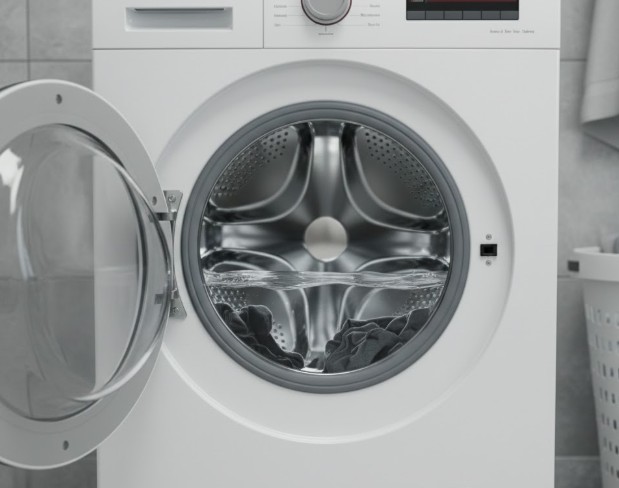
Why is Smelly or Dirty Water Appearing in My Washer?
If the water looks like “dishwater” or smells like sewage, it isn’t coming from the mains—it’s coming from your drain.
This is the most common issue in UK households where the washing machine drain hose is connected to the sink “spigot” (the plastic nozzle under your kitchen sink).
The Siphoning Effect and Sink Backflow
When you empty your kitchen sink, the water travels down the waste pipe. If your plumbing isn’t set up correctly, some of that waste water can be pushed sideways into your washing machine’s drain hose instead of down the drain.
- The “High Loop” Rule: Most DIYers overlook this. Your drain hose must rise above the level of the sink’s water line before it goes down to the drain. If the hose stays low, gravity simply pulls sink water into your machine.
- Blocked U-Bend: If your kitchen sink is draining slowly, the backup will almost certainly find its way into the lowest point—your washing machine drum.
Can a Blocked Filter Cause Water to “Appear”?
Sometimes, the water didn’t “come back” into the machine; it never left.
Modern washing machines can hold several litres of water in the outer tub and internal pipes that you cannot see through the glass.
If your pump filter is partially blocked with coins, lint, or hair, the machine might finish the cycle but fail to expel the last bit of water.
Over an hour or two, this “hidden” water settles into the bottom of the drum, making it look like it appeared out of nowhere.
Statistics on Appliance Failure
According to UK repair data, nearly 35% of washing machine leaks or drainage issues are caused by a blocked pump filter rather than a mechanical failure.
How Can You Fix This at Home? (Step-by-Step DIY)
Fix 1: Cleaning the Inlet Valve Filters
Before replacing parts, try this:
- Turn off the water supply and unscrew the hoses from the back of the machine.
- Look inside the valve entry point; you will see small mesh filters.
- Use pliers to gently remove them, clean off any UK hard water limescale with vinegar, and replace them.
Fix 2: Creating an Anti-Siphon Loop
If you have dirty water backflow:
- Check under your sink.
- Ensure your corrugated drain hose is hooked up high—ideally clipped to the underside of the worktop—before it attaches to the sink pipe. This creates a “gravity break” that prevents sink water from flowing into the washer.
Fix 3: Clearing the Pump Filter
- Locate the small hatch at the bottom front of your machine.
- Lay a towel down (there will be water!).
- Unscrew the filter slowly and remove any debris.
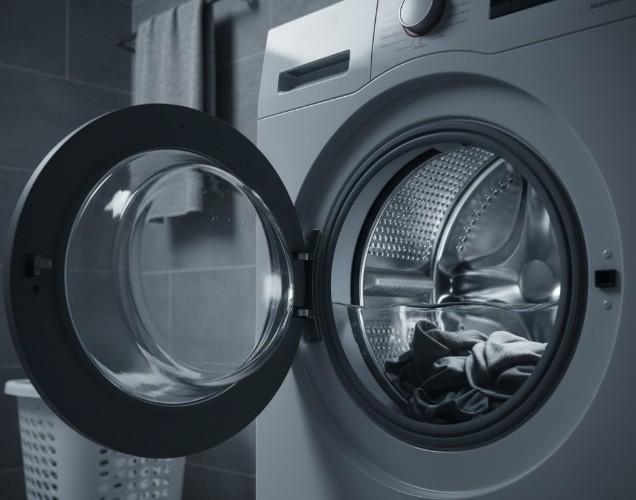
Conclusion
Finding water in your washing machine drum is usually a sign that your machine’s “entry” or “exit” system is compromised.
By identifying whether the water is clean or dirty, you can quickly narrow down the culprit to either a faulty inlet valve or a plumbing siphoning issue.
Pro Tip: Always leave your washing machine door slightly ajar when not in use. This allows the drum to dry out, preventing the build-up of the “smelly water” bacteria that thrive in damp, dark environments.
Disclaimer: If you are unsure about DIY repairs, always consult a qualified appliance engineer. Ensure the appliance is unplugged before attempting any mechanical work.
FAQ about Water in Washing Machine Drum when Not in Use
1. Why does my washing machine smell like rotten eggs?
This is usually caused by stagnant water trapped in the “sump hose” or backflow from the kitchen sink. Run a 90°C service wash with a dedicated cleaner to kill the bacteria.
2. Is it dangerous to have water in the drum?
While not an immediate fire hazard, standing water can damage the drum bearings over time and leads to mould growth which can cause respiratory issues.
3. Should I turn off my water tap after every wash?
If you have a known weeping valve, turning off the isolation tap is a great temporary fix. However, a healthy machine should be able to hold back the water pressure indefinitely.

Home Diagnostics and Technical Standards Specialist at Hello Mag. She provides high-level Expertise in appliance mechanics and scientific pest management, ensuring every guide follows strict safety protocols and manufacturer standards. As a leading Authority on technical home specs, Kanimozhi audits complex data to provide homeowners with the most accurate, verified, and reliable diagnostic solutions available.
0 Comments