
- Quick Comparison: Cleaning Methods for a Fresh Machine
- What Is That Smell? Identifying the Source of the Stink
- How to Stop Washing Machine Smelling Step-by-Step?
- What Are the Best Natural Hacks for a Fresh Machine?
- How Can I Prevent My Washing Machine Smelling in the Future?
- When Should I Call a Professional?
- What are the FAQ about How to Stop Washing Machine Smelling?
Are you looking for an expert guide on how to stop washing machine smelling? There is nothing more frustrating than spending hours tackling the “Mount Everest” of laundry, only to pull a fresh load out of the drum and realise it smells like a damp dog.
As a homeowner or a busy parent, your washing machine is likely the most hardworking appliance in your house. When it starts to emit a funky odour, it doesn’t just affect the kitchen air; it clings to your family’s clothes.
Modern laundry habits are often the secret culprit. While we try to be eco-conscious by running 30°C or 40°C washes, these lower temperatures fail to kill bacteria or dissolve fats.
Over time, this creates a “biofilm”—a slimy layer of bacteria and undissolved detergent that coats the internal parts of your machine.
In this guide, you will learn exactly how to stop washing machine smelling using expert-verified maintenance tips and simple household hacks.
Quick Comparison: Cleaning Methods for a Fresh Machine
Before we dive into the steps, here is a quick look at how the most popular cleaning agents stack up against the UK’s common laundry issues.
| Method | Best For | Cost | Effort |
|---|---|---|---|
| Soda Crystals | Limescale & Hard Water | £ (Very Low) | Medium (Service Wash) |
| White Vinegar & Bicarb | Natural Sanitising | £ (Low) | High (Manual Scrubbing) |
| Commercial Cleaners | Heavy Mould & Biofilm | ££ (Medium) | Low (Just Add & Run) |
| 90°C Service Wash | Killing Bacteria | £ (Energy Cost) | Low (Automatic) |
What Is That Smell? Identifying the Source of the Stink
To fix the problem, you first need to identify which type of “stink” you are dealing with.
- The Musty / Damp Dog Smell: This is almost always caused by mould or biofilm growing in the rubber door seal (gasket) or the detergent drawer.
- The Rotten Egg / Sulphur Smell: This usually indicates a buildup of bacteria in stagnant water, often trapped in the drain pump filter or the waste pipe.
- The Sewage Smell: If the smell is persistent even when the machine isn’t running, it might be a plumbing issue where sewer gases are backing up through the standpipe.
How to Stop Washing Machine Smelling Step-by-Step?
Don’t panic—you don’t need to buy a new appliance. Follow these steps to reset your machine’s freshness.
Step 1: The High-Heat “Service Wash”
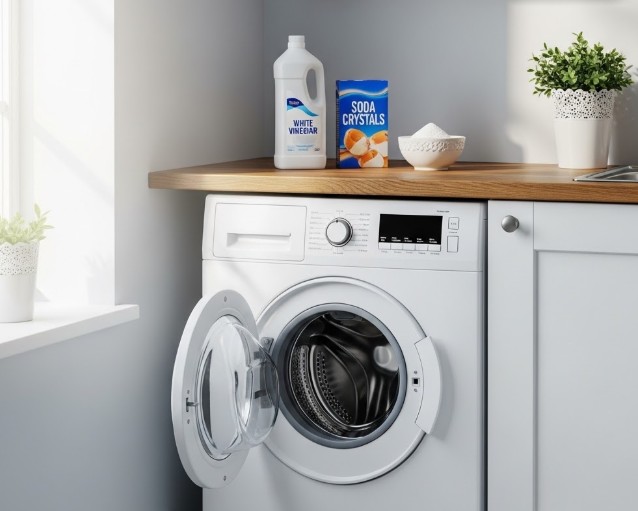
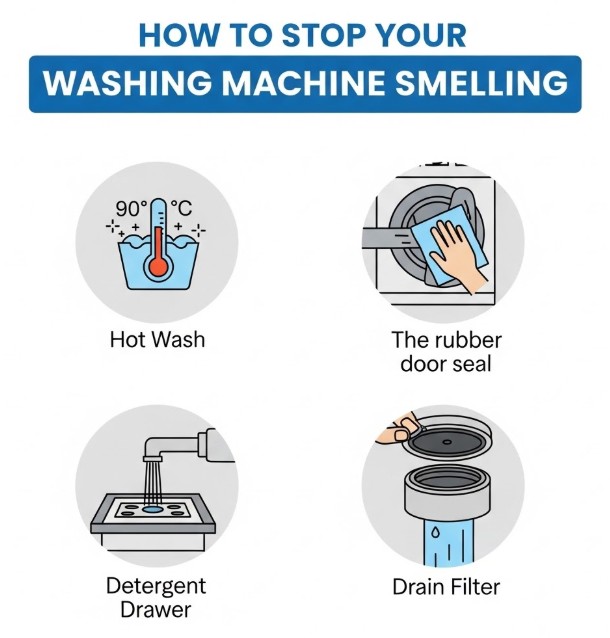
The most effective way to kill bacteria is heat. Run your machine empty on its hottest setting (usually 90°C or a “Coton” cycle). Add 500g of Soda Crystals directly into the drum.
Unlike liquid detergents, soda crystals help break down grease and soften the UK’s notoriously hard water, which prevents limescale from trapping odours.
Step 2: Attacking the Rubber Gasket
The rubber seal is a magnet for hair, coins, and lint. Pull the folds of the seal back. If you see black spots, that’s mould. Wipe this out using a solution of white vinegar and water.
For stubborn mould, soak some kitchen roll in a mild bleach solution, tuck it into the seal for 30 minutes, then scrub and rinse.
Step 3: The Forgotten Detergent Drawer
Most drawers can be completely removed by pressing a small tab in the middle. You will likely find a thick, jelly-like residue of fabric softener underneath.
Soak the drawer in a sink of warm, soapy water and use an old toothbrush to reach the “ceiling” of the drawer compartment in the machine—mould loves to hide there!
Step 4: Draining the Filter
Located behind a small flap at the bottom of the machine, the filter catches everything.
Warning: Have a shallow tray and towels ready, as about a litre of (potentially smelly) water will come out. Clean the debris, rinse the filter, and screw it back in tightly.
What Are the Best Natural Hacks for a Fresh Machine?
If you prefer to avoid harsh chemicals around your children, natural alternatives are highly effective.
- White Vinegar and Bicarb of Soda: Pour 250ml of white vinegar into the detergent drawer and half a cup of bicarbonate of soda into the drum. The chemical reaction helps lift grime and neutralise acidic odours.
- The Power of Soda Crystals: In the UK, limescale is a major contributor to washing machine odours. Adding a tablespoon of soda crystals to every wash doesn’t just stop the smell; it protects your heating element and helps your detergent work better.
How Can I Prevent My Washing Machine Smelling in the Future?
Maintenance is much easier than a deep clean. For busy parents, these three habits will save you hours of scrubbing:
- The “Door Ajar” Rule: Never close the washing machine door immediately after a cycle. Leave it open at least 2 inches to allow the drum to air out. Mould cannot grow in a dry environment.
- Ditch the Excess Fabric Softener: Liquid softener is essentially fat. It coats the pipes and creates the “biofilm” that bacteria feed on. Try using half the recommended amount or swap to white vinegar as a natural softener.
- Monthly Maintenance: Set a recurring reminder on your phone to run a 60°C or 90°C wash once a month—even if the machine doesn’t smell yet.
When Should I Call a Professional?
If you have cleaned the filter, drawer, and drum, but the smell remains, you may have a partial blockage in the external drainage pipes or a “u-bend” issue. If you see water backing up into the sink when the machine drains, it’s time to call a plumber.
What are the FAQ about How to Stop Washing Machine Smelling?
1. Can I use bleach in my washing machine?
Yes, but sparingly. Bleach is excellent for killing mould, but it can degrade rubber seals over time if used too frequently. Always run an extra rinse cycle after using bleach to ensure no residue remains on your clothes.
2. How often should I clean my washing machine filter?
For a busy household doing 5+ loads a week, you should check the filter every 3 to 4 months. If you have pets that shed, check it every 2 months.
3. Does white vinegar damage the rubber seals?
Occasional use is fine, but vinegar is an acid. If used in every single wash, it can eventually weaken the rubber components. Stick to using it for a monthly deep clean or as an occasional softener substitute.
4. Why does my machine smell like sewage?
This is often a plumbing issue called “siphoning.” It happens when the waste hose is pushed too far down the standpipe, or there isn’t a proper trap, allowing sewer gases to enter the machine.
By following this guide on how to stop washing machine smelling, you ensure your machine remains a hygienic tool for your family rather than a breeding ground for bacteria. A clean machine means cleaner clothes and a healthier home!

Home Diagnostics and Technical Standards Specialist at Hello Mag. She provides high-level Expertise in appliance mechanics and scientific pest management, ensuring every guide follows strict safety protocols and manufacturer standards. As a leading Authority on technical home specs, Kanimozhi audits complex data to provide homeowners with the most accurate, verified, and reliable diagnostic solutions available.
0 Comments