
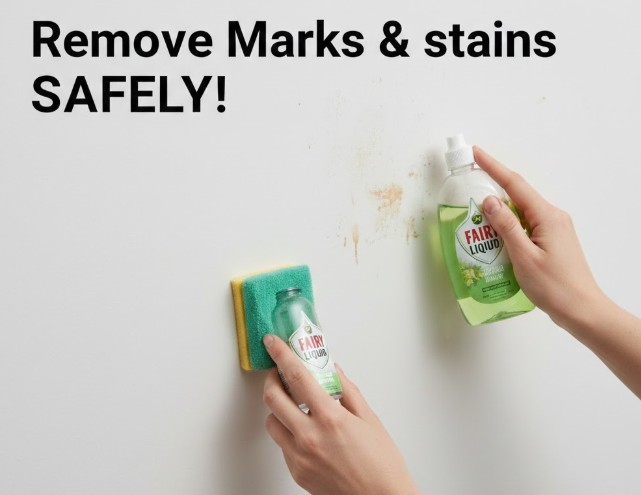
- How to Get Marks Off Painted Walls? - Quick Guide
- The Ultimate Wall Cleaning Compatibility Matrix
- Why You Must Identify Your Paint Finish First?
- What Are The Essential Tools For Mark Removal?
- How To Get Marks Off Painted Walls Using The "Step-Up" Method?
- Can You Use A Magic Eraser On Every Wall?
- How To Remove Specific Stains?
- How To Avoid "Shiny Patches" (Burnishing) While Cleaning?
- Summary For Renters: Protecting Your Deposit
- FAQ About How To Get Marks Off Painted Walls
How to Get Marks Off Painted Walls? – Quick Guide
- Dry Buff: Use a clean, dry white microfibre cloth to gently rub away loose dust or rubber scuffs.
- Mild Soapy Water: Mix warm water with a drop of washing-up liquid. Dip a cloth, wring it until nearly dry, and lightly wipe the area.
- Bicarbonate of Soda: For stubborn scuffs, apply a paste of 3 parts bicarb to 1 part water. Massage gently and wipe clean with a damp cloth.
- Specialist Solutions: Use diluted sugar soap for grease or nicotine, or a pencil eraser for graphite marks.
⚠️ Essential Rule: Never scrub matt paint. This causes “burnishing” (permanent shiny spots). If you have a flat finish, use the lightest touch possible and avoid “Magic Erasers” which act like fine sandpaper.
Whether it’s a dark scuff from a rogue vacuum cleaner, a “masterpiece” by a toddler with a crayon, or mysterious greasy finger marks in the hallway, dirty walls can quickly make a beautiful home feel neglected.
For homeowners, it’s about pride and maintenance. For renters, it’s about something much more immediate: your tenancy deposit. However, “scrubbing” is often the worst thing you can do.
One over-zealous rub with a damp cloth on a matt finish can leave a permanent “shiny” patch—a phenomenon known as burnishing—which is often harder to fix than the original mark.
In this guide, we’ll walk you through the professional, “gentle-first” approach to wall cleaning using UK-standard products and techniques.
The Ultimate Wall Cleaning Compatibility Matrix
Before you reach for the sponge, identify your paint finish. Cleaning a durable “scrubbable” emulsion is very different from cleaning a traditional flat matt.
| Paint Finish | Common Areas | Durability | Recommended Cleaning Agent | Risk Level |
|---|---|---|---|---|
| Matt / Flat | Living Rooms, Ceilings | Low | Plain water or Bicarb paste | High (Polishes easily) |
| Silk / Satin | Hallways, Bedrooms | Medium | Warm soapy water | Medium |
| Eggshell | Woodwork, Kitchens | High | Diluted Sugar Soap / Vinegar | Low |
| Gloss | Skirting, Doors | Very High | All-purpose cleaner / Sugar Soap | Very Low |
| Durable Matt | Kitchens, Bathrooms | High | Dish soap / Specialised cleaners | Medium |
Why You Must Identify Your Paint Finish First?
In the UK, the two most common interior wall finishes are Matt and Silk (or Satin).
The Matt Paint Dilemma
Matt emulsion is loved for its velvety, non-reflective finish that hides lumps and bumps in the plaster. However, it is porous. When you rub matt paint, you are essentially “sanding” the microscopic peaks of the paint surface.
This creates a smooth, reflective spot—the dreaded shiny patch. If you are a renter, these patches can be classed as damage rather than “fair wear and tear.”
The “Curing” Rule
Did you recently repaint? Do not attempt to clean a mark if the paint is less than 28 days old. While paint feels dry to the touch within hours, it takes nearly a month to “cure” and reach its maximum hardness. Cleaning fresh paint will almost certainly result in the paint lifting off the wall.
What Are The Essential Tools For Mark Removal?
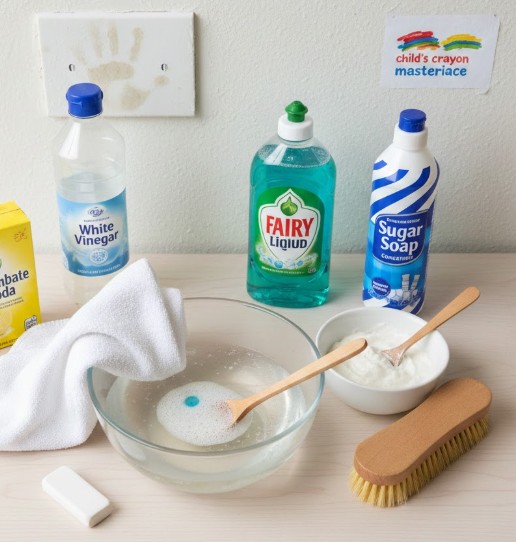
You don’t need expensive “as seen on TV” gadgets. Most professional decorators in the UK rely on a few household staples:
- Microfibre Cloths: Essential. They lift dirt rather than pushing it around. Use white cloths to ensure no dye transfers to your walls.
- Washing-up Liquid: Specifically a grease-cutting one like Fairy Liquid.
- Sugar Soap: The professional’s secret. It’s a mild alkali that cuts through nicotine, grease, and heavy grime.
- Bicarbonate of Soda: A gentle abrasive for stubborn scuffs.
- White Vinegar: Perfect for greasy kitchen splatters.
- Magic Erasers (Melamine Sponges): Use with extreme caution (see below).
How To Get Marks Off Painted Walls Using The “Step-Up” Method?
Always start with the least aggressive method. Only move to the next step if the mark persists.
Step 1: The Dry Dust
Sometimes a scuff mark is just loose dust or rubber transfer. Use a clean, dry microfibre cloth to gently buff the area. If the mark is loose, it will come off without any moisture, which is the safest result for your paint.
Step 2: Warm Soapy Water
Mix a few drops of washing-up liquid in a bowl of lukewarm water.
- Technique: Dip the cloth, then wring it out until it is damp, not dripping.
- The Wipe: Lightly wipe the mark in a circular motion. Do not scrub.
- The Rinse: Use a second cloth dampened with plain water to “rinse” the soap residue away. If soap stays on the wall, it will attract more dust later.
Step 3: The Bicarbonate Of Soda Paste
For tougher scuffs (like those from shoes or furniture), make a paste using 3 parts bicarb and 1 part water.
- Dab a tiny amount onto the mark.
- Gently “massage” the paste into the mark with a cloth.
- Wipe away with a clean, damp cloth.
Step 4: Diluted White Vinegar
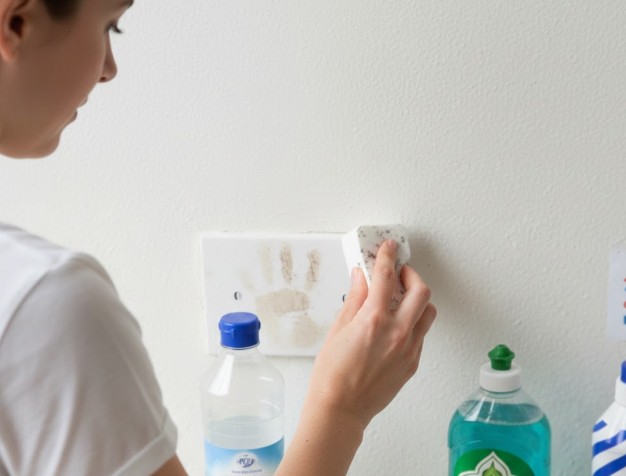
For greasy finger marks near light switches or kitchen splatters:
- Mix 1 tablespoon of white vinegar with 500ml of warm water.
- The acidity helps break down the oils without stripping the paint.
Can You Use A Magic Eraser On Every Wall?
“Magic” erasers are made of melamine foam, which acts like extremely fine sandpaper.
- On Gloss or Silk: They can be effective for stubborn marks.
- On Matt Paint: STOP. They will almost certainly leave a visible “ghost” mark or a shiny patch.
Renter’s Tip: If you must use one, use it with plenty of water and the lightest touch possible. Never use it dry.
How To Remove Specific Stains?
How To Get Crayon Off Walls?
Crayons are wax-based. To remove them, you need to break down the wax.
- Hairdryer Method: Use a hairdryer on a low setting to soften the wax, then wipe it away with a soapy cloth.
- Toothpaste: Non-gel white toothpaste has mild abrasives that can lift crayon pigment. Apply with a cotton bud and wipe away.
How To Get Pencil Marks Off Walls?
Before using water, reach for a high-quality white pencil eraser. Often, “cleaning” a pencil mark with a wet cloth just smears the graphite deeper into the paint pores. Erase it dry first.
How To Avoid “Shiny Patches” (Burnishing) While Cleaning?
If you are cleaning a large area or a stubborn mark, you risk creating a “halo” effect. To avoid this:
- Feather the Edges: Don’t just clean the square inch where the mark is. Gradually lighten your pressure as you move away from the mark to “blend” the cleaned area with the rest of the wall.
- Top to Bottom: If you are washing a whole wall, always start at the bottom and work up. This sounds counter-intuitive, but it prevents dirty water from “streaking” down dry paint, which can leave permanent marks.
Summary For Renters: Protecting Your Deposit
If a mark won’t come off after Step 3, consider a touch-up rather than more scrubbing. If you have the original paint, a small artist’s brush can “stipple” a tiny amount of paint over the mark.
This is usually much less noticeable to a landlord than a large, shiny, scrubbed patch in the middle of a wall.
Related Article: How to Dispose of Paint in UK? – Smart Tips To Get Rid Of It
FAQ About How To Get Marks Off Painted Walls
1. Does WD-40 work on wall marks?
While some “hacks” suggest WD-40 for crayon, we advise against it on painted walls. It is an oil-based lubricant and can leave a permanent grease stain that is harder to fix than the original crayon.
2. Can I use baby wipes to clean walls?
Baby wipes often contain oils and lotions. On a glossy surface, they might be fine, but on matt emulsion, they can leave greasy streaks. Stick to a damp microfibre cloth.
3. What if the paint actually comes off?
If the paint is flaking or lifting, the wall likely wasn’t primed properly, or the paint is very old. At this stage, cleaning is no longer the solution—you will need to sand the area lightly and apply a fresh coat of paint.
4. Does sugar soap remove scuffs?
Yes, sugar soap is excellent for “all-over” cleaning, but it is quite strong. Always dilute it according to the bottle instructions and rinse well.
About the Author: Hello Magazine UK’s lifestyle team explores the best ways to maintain a beautiful, stress-free home.

Home Diagnostics and Technical Standards Specialist at Hello Mag. She provides high-level Expertise in appliance mechanics and scientific pest management, ensuring every guide follows strict safety protocols and manufacturer standards. As a leading Authority on technical home specs, Kanimozhi audits complex data to provide homeowners with the most accurate, verified, and reliable diagnostic solutions available.
0 Comments