
- Why Proper Potato Storage Matters?
- What Conditions Do Potatoes Need to Stay Fresh?
- Where to Store Potatoes in a UK Home?
- How to Store Potatoes After Harvest?
- How to Store Home-Grown Potatoes Properly?
- What are the Best Containers for Potato Storage?
- How to Store Potatoes Long Term?
- How to Prevent Sprouting and Green Skin?
- How to Store Peeled or Cooked Potatoes?
- What are the Common UK Storage Challenges and How to Handle Them?
- Conclusion – Store Your Potatoes the Right Way
- What are the Frequently Asked Questions (FAQ) About How to Store Potatoes?
If you’ve ever bought or harvested potatoes and noticed them sprouting, turning green, or going soft too quickly, you’re not alone.
Potatoes are sensitive to their environment, and how you store them plays a major role in how long they last.
In this guide, you’ll learn how to store potatoes the right way, where to store them in your home, how to handle home-grown varieties, and what to do if you’re planning for long-term storage.
Whether you’ve just picked them up from the supermarket or grown them yourself, this guide will help you store potatoes effectively in typical UK conditions.
Why Proper Potato Storage Matters?
Potatoes spoil quickly if they’re exposed to heat, light, or moisture. Poor storage often leads to sprouting, greening, or rot. These not only affect the flavour but can also impact food safety.
Storing potatoes correctly helps extend their shelf life, maintain their texture and flavour, and reduce unnecessary waste in your kitchen.
Whether you keep a few in the cupboard or a full crop from your garden, good storage can make a big difference.
What Conditions Do Potatoes Need to Stay Fresh?
Potatoes stay fresh longest in a space that is cool, dark, dry, and well-ventilated.
- Temperature: The ideal range is between 4°C and 10°C. If stored colder, such as in a fridge, their starches can turn into sugar, altering both taste and texture.
- Light: Exposure to light leads to greening of the skin, which may signal the presence of solanine—a natural toxin.
- Humidity: Excess moisture encourages rot. Potatoes need a dry environment.
- Airflow: Good ventilation prevents heat and moisture build-up.
Understanding these storage conditions can help you choose the right place to keep your potatoes at home.
Where to Store Potatoes in a UK Home?
The best place to store potatoes is somewhere cool and dark with good air circulation.
Suitable options include:
- A cool kitchen cupboard or pantry away from appliances
- Under-stair cupboards, if they don’t get too warm
- Utility rooms, sheds or garages (if temperatures remain above freezing)
- Cellars or basements
Where To Avoid Storing Potatoes?
- On countertops, especially near the cooker or in sunlight
- In sealed plastic bags or airtight containers
- Next to onions or apples, which release ethylene gas and accelerate sprouting
Fridge storage is a bit controversial. Traditional advice said to avoid it, but updated guidance from the UK’s Food Standards Agency suggests refrigerating potatoes is acceptable to reduce food waste, especially if you’re boiling or roasting them. However, avoid frying refrigerated potatoes at high heat to reduce acrylamide risk.
How to Store Potatoes After Harvest?
If you grow your own, storing potatoes after harvest requires a few extra steps.
Start by curing the potatoes. This means placing them in a cool, dark, and ventilated area (around 10°C to 15°C) for about 10 to 14 days. This allows the skin to toughen and small surface wounds to heal.
Do not wash them before storing, as this introduces moisture and speeds up decay. Only store firm, unblemished potatoes. Any with bruises or cuts should be used sooner rather than stored.
After curing, transfer the potatoes to long-term storage containers in a suitable location.
How to Store Home-Grown Potatoes Properly?
Home-grown potatoes are often harvested in larger quantities than shop-bought ones, so long-term storage matters even more.
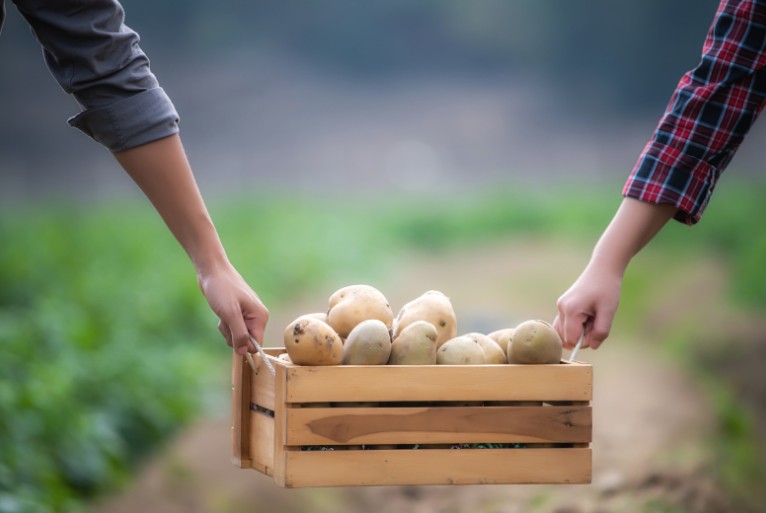
- Store them in paper bags, jute sacks, or wooden crates
- Avoid washing the potatoes until just before use
- Keep the storage space dark, cool, and ventilated
- Separate early and maincrop varieties if storing both
- Label your stored potatoes with the harvest date
Check regularly and use any that show signs of softening or sprouting first.
What are the Best Containers for Potato Storage?
The container you use can affect how well your potatoes last.
Good options include:
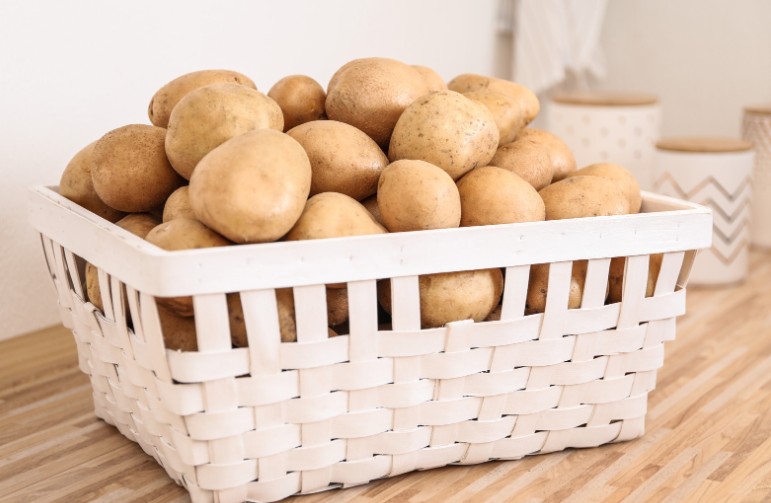
- Paper bags
- Jute or burlap sacks
- Mesh bags
- Wooden crates or slatted boxes
- Cardboard boxes with ventilation holes
What are Should be Avoid for Potato Storage?
- Plastic bags or cling film, which trap moisture
- Sealed containers with no airflow
- Transparent bins that let light in
Always store potatoes in small batches if possible. Overcrowding can lead to uneven airflow and faster spoilage.
How to Store Potatoes Long Term?
To store potatoes long term, especially through winter, start with fully cured, undamaged potatoes.
Choose a storage location with stable temperature and low light. A basement, shed, or garage can work, provided it’s not damp or freezing.
Rotate your stock regularly. Use older or sprouting potatoes first. Avoid stacking too deep, and check every few weeks for any signs of spoilage or sprouting.
By following these steps, your potatoes can last for several months, especially maincrop varieties like Maris Piper or Desiree.
How to Prevent Sprouting and Green Skin?
Sprouting in Potato occurs naturally over time, but it can be delayed with the right environment.
- Store in complete darkness
- Keep away from appliances that emit heat
- Ensure good airflow between potatoes
- Never store near onions, apples, or bananas, which speed up sprouting
- Check them often and remove any that begin to sprout or soften
Green skin is a sign of light exposure and may contain solanine. Cut away any green parts before cooking, or discard the potato if the green area is extensive.
How to Store Peeled or Cooked Potatoes?
If you’ve already peeled or cooked your potatoes, they need to be stored differently.
For peeled raw potatoes:
- Submerge in cold water and refrigerate
- Use within 24 hours for best quality
For cooked potatoes:
- Let them cool completely, then refrigerate in an airtight container
- Use within 3 to 4 days
- Reheat thoroughly before eating
Never leave peeled or cooked potatoes at room temperature for long periods, as bacteria can grow quickly.
What are the Common UK Storage Challenges and How to Handle Them?
Many UK homes don’t have cellars or cool pantries, but there are still workarounds.
- Use an unheated utility room or a cool cupboard
- Hang a breathable storage bag in a shaded area of the kitchen
- In flats or small homes, avoid under-sink storage due to humidity
- In warm months, monitor conditions closely and avoid bulk buying
In damp environments, consider placing a small bowl of rice near your potatoes to help absorb excess moisture.
Conclusion – Store Your Potatoes the Right Way
Storing potatoes correctly helps you reduce food waste, save money, and make your meals more enjoyable.
Whether you’ve bought a few from the supermarket or grown your own harvest, the key is to keep them cool, dark, dry, and well-ventilated.
Avoid washing before storage, use breathable containers, and check your potatoes regularly. When in doubt, use the soft or sprouting ones first and discard any that show signs of rot or extensive greening.
With these tips, you’ll always have fresh, firm potatoes ready for your next meal.
What are the Frequently Asked Questions (FAQ) About How to Store Potatoes?
1. Should you refrigerate potatoes?
Yes, if you’re roasting or boiling them later. However, avoid frying refrigerated potatoes at high heat, as this can produce acrylamide. Traditional advice warned against refrigeration, but updated UK guidance supports it to reduce food waste.
2. How long do potatoes last in storage?
Potatoes can last 2 to 3 months in ideal conditions. Early potatoes spoil faster, while maincrop varieties are better suited for long-term storage.
3. Can I store potatoes in plastic bags?
No. Plastic bags trap moisture, which leads to rotting. Always use breathable containers like paper bags or mesh sacks.
4. How do I store potatoes after harvest?
Cure them first for 1 to 2 weeks in a cool, dark space, then store them in breathable containers away from light and moisture.
5. Why are my stored potatoes turning green?
Exposure to light causes greening. This can make the potato taste bitter and may signal increased solanine content. Always store in complete darkness.
6. Can I store potatoes with onions?
No. Onions release ethylene gas that speeds up sprouting and spoilage in potatoes. Keep them separate.

Home Diagnostics and Technical Standards Specialist at Hello Mag. She provides high-level Expertise in appliance mechanics and scientific pest management, ensuring every guide follows strict safety protocols and manufacturer standards. As a leading Authority on technical home specs, Kanimozhi audits complex data to provide homeowners with the most accurate, verified, and reliable diagnostic solutions available.
0 Comments