
- Standard Oven Size Comparison Table (UK)
- Are Built in Ovens a Standard Size in the UK?
- How Do Single Oven Dimensions Work for Your Cabinetry?
- What Are the Dimensions for Built-in vs Built-under Double Ovens?
- What Are Compact Ovens and When Should You Choose Them?
- Do You Need to Leave Space for Ventilation?
- What Electrical Requirements Should You Check Before Buying?
- Conclusion: Your Renovation Checklist
- FAQ about Are Built in Ovens a Standard Size
If you are currently browsing showroom floors or scrolling through appliance websites, you’ve likely asked yourself: are built in ovens a standard size?
When you are a first-time homebuyer or a kitchen renovation enthusiast, the terminology can be overwhelming. You’ll hear terms like “integrated,” “built-under,” and “standard 60cm,” but assuming everything is “standard” is a shortcut to a very expensive mistake.
In the UK, while there is a general industry standard for width, heights and depths can vary enough to make your new oven stick out like a sore thumb—or simply not fit at all.
This guide will walk you through everything you need to know about UK oven dimensions, the “standard size” myth, and the hidden measurements that will ensure your renovation goes off without a hitch.
Standard Oven Size Comparison Table (UK)
To help you get started, here is a quick-reference table of the standard dimensions you will find across major UK retailers like Neff, Bosch, and Beko.
| Oven Type | Standard Height | Standard Width | Standard Depth | Typical Capacity |
|---|---|---|---|---|
| Single Oven | 59cm – 60cm | 59.5cm | 55cm – 57cm | 60 – 75 Litres |
| Double (Built-in) | 88cm – 90cm | 59.5cm | 55cm – 57cm | 100+ Litres |
| Double (Built-under) | 70cm – 72cm | 59.5cm | 55cm – 57cm | 90 – 100 Litres |
| Compact Oven | 45cm | 59.5cm | 55cm | 35 – 50 Litres |
Are Built in Ovens a Standard Size in the UK?
The short answer is: Yes, for width, but no for height.
In the UK, the vast majority of built-in ovens are designed to fit into a standard 600mm (60cm) wide cabinet. However, if you measure the actual appliance, you will notice it usually measures 595mm.
This 5mm difference is intentional; it allows the oven to slide into the cabinet housing with a tiny bit of “wiggle room” while the front fascia covers the edges of the cabinetry for a seamless look.
The Depth Standard
Most ovens have a depth of around 55cm to 58cm. This is designed to fit inside a standard 60cm deep kitchen unit. However, as a renovator, you must account for what is behind the oven.
If your gas pipe or a bulky electrical socket is positioned directly behind the appliance, the oven may protrude forward, preventing it from sitting flush with your cupboard doors.
How Do Single Oven Dimensions Work for Your Cabinetry?
Single ovens are the most popular choice for UK kitchens. They are versatile because they can be installed at eye-level (in a tall housing unit) or built-under a standard worktop.
- Appliance Height: Usually 59.5cm.
- The Housing Unit: While the oven is 60cm wide, the wood of your cabinet has a thickness (usually 18mm). Therefore, the internal “cut-out” width of your cabinet is typically 56cm to 56.4cm.
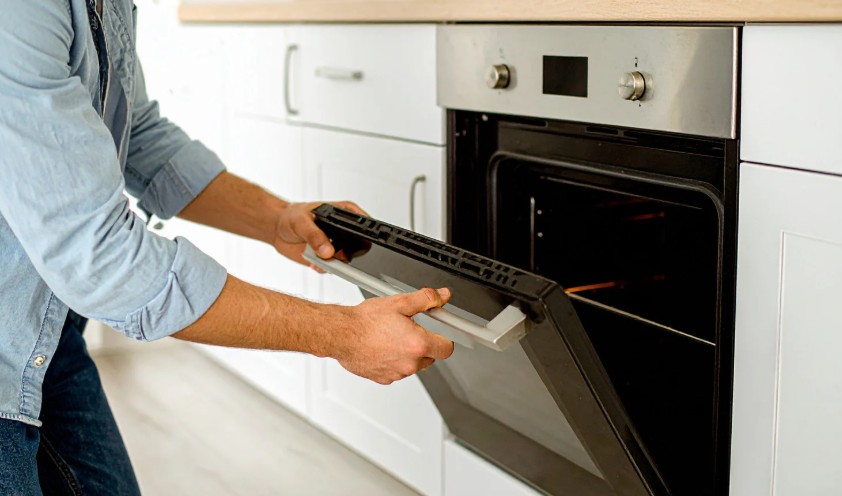
When you are buying a replacement, don’t just measure the front of the oven. You need to ensure the “carcass” (the box that sits inside the cupboard) matches the internal dimensions of your existing housing.
What Are the Dimensions for Built-in vs Built-under Double Ovens?
This is where many first-time buyers get confused. In the UK, there are two distinct types of double ovens, and they are not interchangeable.
1. Built-in Double Ovens (Tall Units)
These are designed to be installed at eye-level. They typically measure 90cm in height. Because they are so tall, they cannot fit under a standard kitchen worktop. If you want one of these, you must have a “tall housing unit” in your kitchen plan.
2. Built-under Double Ovens
These are specifically designed to fit beneath a standard worktop. To allow for the height of the worktop and the plinth (kickboard) at the bottom, these ovens are shorter, usually measuring around 72cm in height.
The Content Gap Fix: If you currently have a single oven under your worktop and you want to upgrade to a double, you must buy a “built-under” model. You cannot simply squeeze a 90cm double oven into that space.
What Are Compact Ovens and When Should You Choose Them?
If you have a small kitchen or you are a serious “foodie” who wants three or four different cooking zones, compact ovens are your best friend.
- Height: 45cm.
- Function: They often double as microwaves or steam ovens.
Because these smaller units are frequently used for reheating, it is vital to keep them fresh; if you encounter any lingering odours, knowing the tips for removal burnt smell from microwave oven units will help maintain your kitchen’s environment.
For a high-end renovation look, many enthusiasts “stack” a 45cm compact oven on top of a 60cm single oven in a tall unit. This creates a professional-looking “cooking tower” that remains within the standard 60cm width.
Do You Need to Leave Space for Ventilation?
One of the biggest mistakes DIY renovators make is pushing the oven as far back as possible without considering airflow.
Built-in ovens generate significant heat. If that heat cannot escape, it can damage the glue in your MDF cabinetry, causing the laminate to peel (delaminate). Most manufacturers require a minimum 10mm to 20mm gap at the rear of the appliance.
Additionally, some ovens require a small ventilation cut-out in the plinth or at the top of the housing unit to allow cool air to circulate. Always check the “technical drawing” PDF on the manufacturer’s website before finalizing your cabinetry.
What Electrical Requirements Should You Check Before Buying?
Before you fall in love with a high-spec pyrolytic oven, you need to check your kitchen’s “juice.”
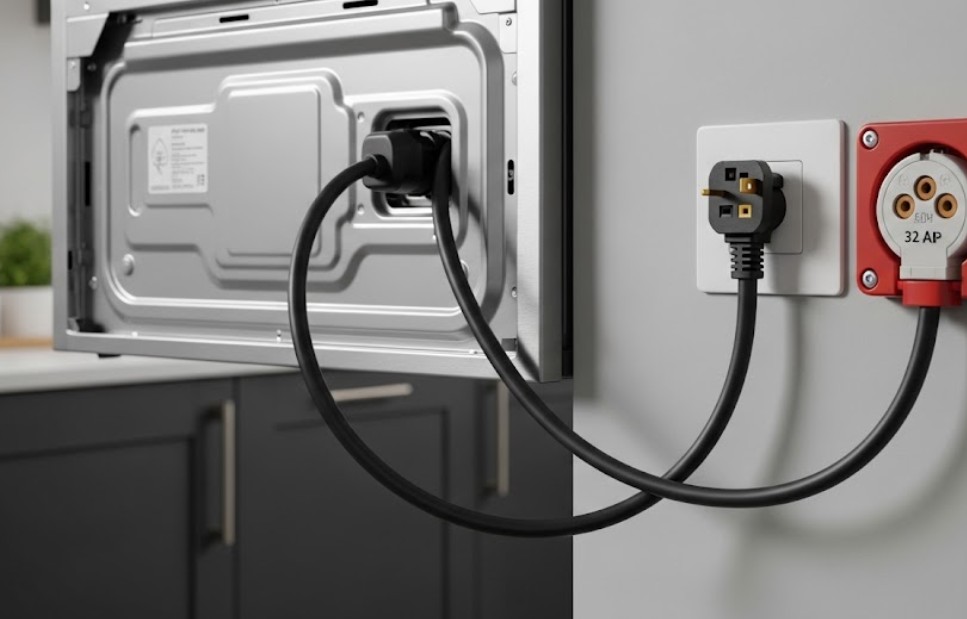
- 13 Amp Ovens: These can often be fitted with a standard UK 3-pin plug. These are “plug-and-play” and are perfect for simple kitchen updates.
- 32 Amp Ovens: Many modern, powerful ovens require more power than a standard socket can provide. These must be “hardwired” into a dedicated cooker circuit by a qualified electrician.
If you are upgrading from a basic single oven to a powerful double oven, you might need to have a new cable pulled from your fuse board. Factor this into your renovation budget!
Conclusion: Your Renovation Checklist
When you are planning your kitchen, remember that “standard” is a guideline, not a guarantee. To ensure your oven fits perfectly:
- Check the Type: Decide between a single, built-under double, or eye-level double before buying cabinets.
- Verify the Depth: Ensure your plumber or electrician hasn’t placed pipes or sockets directly behind the oven space.
- Confirm the Power: Check if your chosen model requires a 13A plug or a 32A hardwired connection.
- Mind the Gap: Ensure your kitchen fitter leaves the required ventilation space to protect your beautiful new cabinets.
By following these steps, you’ll ensure that your new oven doesn’t just look great, but performs safely for years to come.
FAQ about Are Built in Ovens a Standard Size
1. Will a 60cm oven fit in a 60cm gap?
Yes. A “60cm oven” is actually designed to fit a 60cm external width cabinet. The oven itself will be slightly narrower (approx. 59.5cm) to ensure it slides in easily.
2. How do I measure my current oven for a replacement?
Open the oven door and measure the height and width of the aperture (the hole in the cabinetry), rather than just the front glass of the oven. Also, measure the depth from the front of the carcass to the back wall.
3. Can I put a gas hob over a standard built-in oven?
Usually, yes. However, you must check the depth of the hob. Some “slimline” worktops (20mm or 12mm) don’t provide enough clearance between the bottom of the gas hob and the top of the oven. You may need a heat shield or a deeper worktop.
4. Are Bosch, Neff, and Siemens ovens the same size?
Generally, yes. These three brands are part of the BSH group and often share the same “chassis” dimensions, making them very easy to swap if you are loyal to those brands.

Home Diagnostics and Technical Standards Specialist at Hello Mag. She provides high-level Expertise in appliance mechanics and scientific pest management, ensuring every guide follows strict safety protocols and manufacturer standards. As a leading Authority on technical home specs, Kanimozhi audits complex data to provide homeowners with the most accurate, verified, and reliable diagnostic solutions available.
0 Comments