
- Understanding the Problem: Why is there water in my fridge?
- Why is there water at the bottom of my fridge?
- What are the Secondary Causes of Fridge Leaks?
- Tenant vs. Homeowner: Who is Responsible for Repairs?
- Conclusion: Preventing Future Puddles
- What are the FAQ about Why is there water in my fridge?
Many homeowners often ask, “why is there water in my fridge?” when they discover unexpected moisture inside their appliance.
Finding a puddle at the base of your appliance is a common frustration for many UK households. Whether you are a homeowner, a tenant, or a DIY enthusiast, the sight of water pooling around your groceries is never welcome.
Key Takeaways: Quick Troubleshooting
- Most Common Cause: A blocked defrost drain hole (the “gully”).
- Quick Fix: Ensure food isn’t touching the back wall.
- Safety First: Always unplug the appliance before attempting internal repairs.
- UK Context: Check your door seals with the “Banknote Test.”
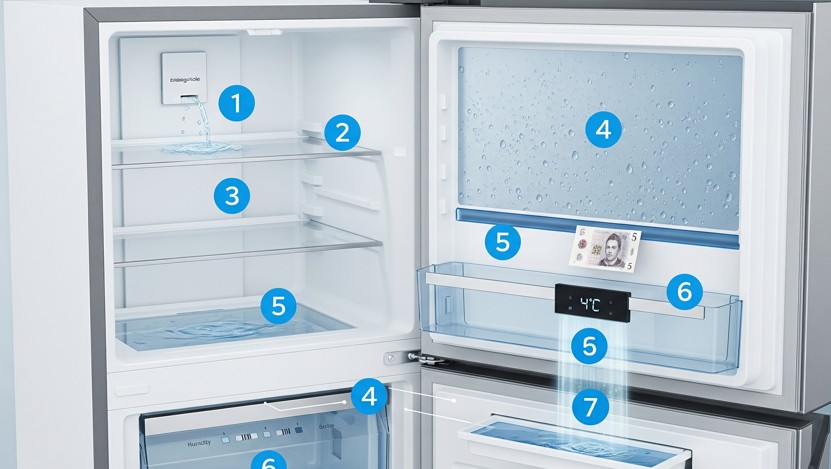
Understanding the Problem: Why is there water in my fridge?
To understand why is there water in my fridge, we first need to look at how modern “auto-defrost” appliances work. Most fridges in the UK feature a “wet wall” at the back. As the fridge cools, moisture in the air condenses on this cold surface, forming water droplets.
How the Defrost System Works?
Under normal conditions, this water:
- Runs down the back wall.
- Collects in a small gully.
- Exits through a drainage hole.
- Evaporates in a tray sitting atop the warm compressor.
If any part of this journey is interrupted, you end up with a soggy salad drawer.
| Common Issue | Difficulty | Tools Needed | Estimated Time |
|---|---|---|---|
| Blocked Drain Hole | ⭐ (Very Easy) | Pipe cleaner / Straw | 10 Minutes |
| Obstructed Airflow | ⭐ (Very Easy) | None (Rearranging) | 5 Minutes |
| Faulty Door Seal | ⭐⭐ (Easy) | Warm water / Cloth | 15 Minutes |
| Cracked Drip Tray | ⭐⭐⭐ (Moderate) | Screwdriver | 30 Minutes |
| Incorrect Leveling | ⭐⭐ (Easy) | Spirit Level | 10 Minutes |
Why is there water at the bottom of my fridge?
If you notice that the puddles are specifically gathering under your vegetable crisper, you are likely asking: why is there water at the bottom of my fridge?
While a blocked drain hole is still a possibility, water at the very bottom often points to a combination of two specific UK kitchen factors: airflow and humidity.
1. The Blocked Defrost Drain Hole
The most frequent answer to “why is there water in my fridge” is a blocked defrost drain. Over time, crumbs or mould can clog the small hole.
- The Fix: Use a dedicated fridge-clearing tool or a flexible pipe cleaner. Avoid using sharp metal objects like screwdrivers, as these can puncture the internal casing.
2. Food Touching the Rear Wall
In smaller UK kitchens, we often “overstuff” our fridges. If items like milk cartons touch the back wall, they act as a bridge.
- The Fix: Maintain a 2-inch gap between your food and the back wall. This allows the air to circulate correctly.
3. Incorrect Salad Crisper Management
Vegetables “breathe” through transpiration. If your drawer is airtight, moisture builds up and turns into liquid water.
- The Fix: Open the humidity slider slightly for leafy greens and avoid using non-breathable plastic bags.

What are the Secondary Causes of Fridge Leaks?
4. Faulty or Dirty Door Seals (The Banknote Test)
In the UK, our kitchens can get quite humid. If yourfridge door seal (the gasket) is warped, warm air enters, causing excessive condensation.
- The Fix: Perform the “Banknote Test.” Place a £5 note halfway inside the door and close it. If it slides out easily, clean the seal with warm, soapy water or replace it.
5. Your Fridge Isn’t Level
Fridges should be tilted slightly backward (by a few millimetres) so the door closes under its own weight and water flows toward the drain.
- The Fix: Adjust the front “feet” until the appliance has a very slight backward lean.
6. Internal Temperature Settings
The ideal temperature for a UK fridge is between 3°C and 5°C.
- The Issue: If set too cold, condensation freezes into ice, which later melts and overwhelms the drain hole.
7. The Evaporation Tray is Cracked
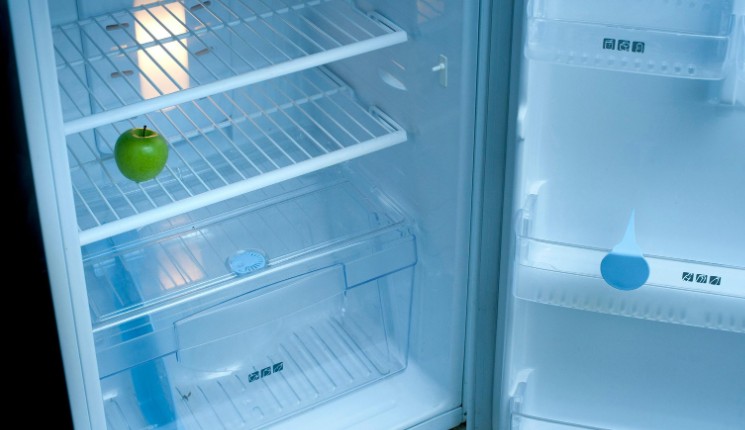
If the water is underneath the fridge on your kitchen floor, the issue might be the evaporation tray located above the compressor at the back.
- The Fix: Inspect the plastic tray for cracks and replace if brittle.
Tenant vs. Homeowner: Who is Responsible for Repairs?
In the UK, the responsibility for fridge maintenance depends on your contract:
- Homeowners: You are responsible for all maintenance and repairs.
- Tenants: Under the Landlord and Tenant Act 1985, landlords are generally responsible for “fair wear and tear.” However, if the water is caused by a blockage you haven’t cleaned, the landlord may charge you for the repair call-out.
Conclusion: Preventing Future Puddles
Solving the mystery of “why is there water in my fridge” usually doesn’t require a professional. By unblocking the drain hole and ensuring proper airflow, you can resolve most issues in minutes.
What are the FAQ about Why is there water in my fridge?
1. How do I unblock a fridge drain hole?
Use a flexible pipe cleaner or a straw to clear debris. Flush the hole with a teaspoon of bicarbonate of soda mixed with warm water to prevent mould regrowth.
2. Is it normal to have water on the back wall?
Yes. Tiny droplets are a sign of healthy cooling. However, a thick sheet of ice or water pooling at the base indicates a problem.
3. Why is there water at the bottom of my fridge after cleaning the drain?
Check your door seals. If warm air is leaking in, the fridge produces more moisture than the drainage system can manage.
4. Can I use bleach to clean the drainage gully?
No. It is better to avoid bleach inside a fridge due to food safety and strong odours. Stick to white vinegar or bicarbonate of soda.

Home Diagnostics and Technical Standards Specialist at Hello Mag. She provides high-level Expertise in appliance mechanics and scientific pest management, ensuring every guide follows strict safety protocols and manufacturer standards. As a leading Authority on technical home specs, Kanimozhi audits complex data to provide homeowners with the most accurate, verified, and reliable diagnostic solutions available.
0 Comments