
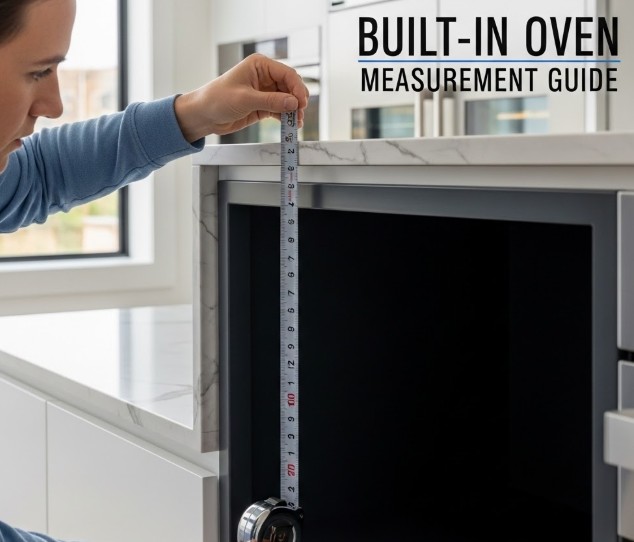
- At A Glance: UK Standard Built-In Oven Dimensions
- How To Measure For A Built In Oven? A Step-By-Step For Your Oven Housing Unit
- How Do You Account For Ventilation and Electrical Connections?
- How Do You Avoid Common Measuring Mistakes?
- Conclusion
- What are the FAQ About How To Measure For A Built In Oven?
How to measure for a built in oven correctly is the most important skill you can master before clicking ‘buy’ on a new appliance. Upgrading your kitchen with a sleek, integrated look starts with one critical task: getting the measurements right.
Whether you are a homeowner embarking on a DIY project or a kitchen renovator planning a full overhaul, an error of just 5mm can be the difference between a seamless finish and a costly return.
In the UK, while we often ask are built-in ovens a standard size, the reality is that “built-in” and “built-under” models have distinct requirements. This guide will walk you through exactly how to measure for a built in oven in your space to ensure your new appliance fits like a glove.
At A Glance: UK Standard Built-In Oven Dimensions
Before you reach for the tape measure, consult this comparison table to understand the typical space requirements for UK kitchen carcasses.
| Oven Type | Typical Width (mm) | Typical Height (mm) | Typical Depth (mm) | Installation Type |
|---|---|---|---|---|
| Single Oven | 595 – 600 | 590 – 600 | 550 – 570 | Eye-level or Under-worktop |
| Compact Oven | 595 – 600 | 450 – 455 | 550 – 560 | Eye-level |
| Double (Built-In) | 595 – 600 | 880 – 900 | 550 – 570 | Eye-level (Tall Housing) |
| Double (Built-Under) | 595 – 600 | 700 – 720 | 550 – 570 | Under-worktop |
Note: If you are opting for a Compact Oven (which often doubles as a microwave), maintenance is key to keeping the cavity fresh. If you run into issues after installation, see our guide on how to remove a burnt smell from a microwave oven.
How To Measure For A Built In Oven? A Step-By-Step For Your Oven Housing Unit
When measuring for a built-in oven, you aren’t just measuring the old appliance; you are measuring the aperture (the hole) and the carcass (the cupboard).

1. How Do You Measure The Width?
In the UK, the vast majority of kitchen units are 600mm wide (external measurement). However, the oven sits inside this. You must measure the internal width of the housing.
- The Rule: Standard ovens are designed to fit into a 600mm wide cabinet, meaning the oven itself is usually 595mm wide to allow for the thickness of the cabinet walls.
2. How Do You Determine The Correct Height?
The height is where most mistakes happen, particularly with double ovens.
- Single Ovens: Usually require a 600mm high aperture.
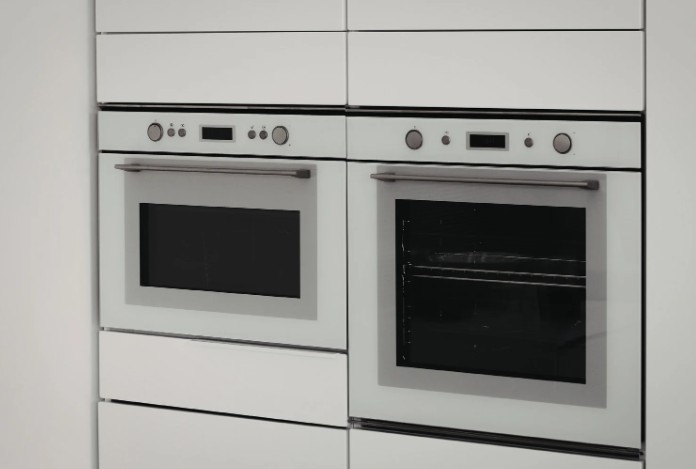
- Built-In Double Ovens: These are designed for tall housing units at eye level and usually measure around 880-900mm.
- Built-Under Double Ovens: These are shorter (700-720mm) because they must fit beneath a standard UK worktop height while allowing for a plinth at the bottom.
3. What Depth Is Required For Modern Built-In Ovens?
Standard kitchen units have a depth of 600mm. Most ovens have a depth of 550mm to 570mm.
- The Gap Matters: You must ensure there is at least 20mm to 30mm of space behind the oven for ventilation and to accommodate the power cable or gas pipe. If your cupboard has a back panel, you may need to remove it or cut a hole.
How Do You Account For Ventilation and Electrical Connections?
A common content gap in many guides is the technical “fitment” requirements. It isn’t just about the box fitting the hole; it’s about safety and airflow.
Does Your Oven Need a 13-Amp Plug or a 32-Amp Connection?
Before buying, check the “Total Connected Load”.
- Many modern single ovens are “Plug and Play” (under 3kW) and use a standard 13-amp socket.
- Most double ovens and powerful single ovens (over 3kW) require a dedicated 32-amp circuit and must be hardwired by a qualified electrician. Make sure your measurements allow for the placement of the “cooker outlet” box—it shouldn’t be directly behind the oven if space is tight.
How Much Ventilation Space Do You Need?
Built-in ovens draw air from the bottom and expel it through the front or top. If you don’t have the recommended 20mm+ rear clearance, the oven can overheat, potentially damaging your kitchen carcass or shortening the lifespan of the appliance’s electronics.
How Do You Avoid Common Measuring Mistakes?
- Don’t Measure the Old Oven: Manufacturers change designs. Always measure the internal cabinet space rather than the dimensions of the appliance you are replacing.
- Check for Level Ground: If your kitchen floor is uneven, your housing unit might be slightly tilted. Use a spirit level on the base shelf where the oven will sit. If it isn’t level, the oven door may not seal correctly, leading to heat loss.
- Watch the “Lip”: Remember that the front face of the oven (the control panel and door) is designed to sit on top of the cabinet edges. Only the “body” of the oven goes inside the hole.
Conclusion
Measuring for a built-in oven is a “measure twice, cut once” scenario. By focusing on the internal width, height, and depth of your carcass—and ensuring you have the correct electrical and ventilation clearances—you can shop with confidence. If you are in doubt, always download the manufacturer’s specification sheet before making your purchase.
What are the FAQ About How To Measure For A Built In Oven?
1. Are all built-in ovens a standard size in the UK?
While 600mm width is the standard, heights vary significantly between single, compact, and double models. Always check the specific “Technical Drawing” provided by the manufacturer.
2. Will a 60cm oven fit in a 60cm gap?
Yes. A “60cm oven” is actually roughly 59.5cm, specifically designed to fit into a standard 60cm wide (external) kitchen carcass.
3. What are the cutout dimensions for a single oven?
Generally, you need a width of 560mm (internal), a depth of 550mm, and a height of 585-590mm.
4. How do I measure for a built-under double oven?
Measure from the underside of your worktop to the top of the plinth. You typically need a 700mm to 720mm high aperture. Ensure you aren’t buying a “Built-in” double oven (900mm) by mistake, as it will not fit under a worktop.

Home Diagnostics and Technical Standards Specialist at Hello Mag. She provides high-level Expertise in appliance mechanics and scientific pest management, ensuring every guide follows strict safety protocols and manufacturer standards. As a leading Authority on technical home specs, Kanimozhi audits complex data to provide homeowners with the most accurate, verified, and reliable diagnostic solutions available.
0 Comments