

🍋 Can I Clean My Dolce Gusto With Vinegar?
While you can technically use vinegar to clean a Dolce Gusto, it is not recommended by experts or manufacturers. Vinegar’s acetic acid is highly corrosive to the machine’s internal rubber seals (O-rings) and can leave a persistent sour taste that ruins your coffee for weeks.
The Temptation of the “Pantry Fix”
In the UK, we love a clever home hack. Whether it’s cleaning windows with newspaper or using bicarbonate of soda on carpets, white vinegar is often seen as the ultimate “save-all” for household maintenance.
When your coffee machine starts to slow down or that dreaded maintenance light flickers on, the question naturally arises: can I clean my Dolce Gusto with vinegar?
While vinegar is an effective descaler for a basic kettle, your Dolce Gusto is a high-pressure appliance. Using the wrong acid can be a costly mistake.
In this guide, we’ll look at the chemical impact of vinegar and why sticking to the professional steps for cleaning and descale a Dolce Gusto coffee machine is the only way to guarantee a long life for your appliance.
The Science: Vinegar vs. Official Descaling Solutions
The conflict lies in the type of acid being used. White vinegar contains acetic acid (usually at a 5% concentration). While this dissolves limescale, it is also a “volatile” acid that interacts poorly with certain metals and rubbers.
Comparison: Cleaning Agents for Dolce Gusto
| Feature | White Vinegar | Lactic Acid (Official) |
|---|---|---|
| Limescale Removal | Moderate | Very High |
| Seal Safety | Risky (Corrosive) | Safe |
| Rinse Frequency | 5-8 Tanks | 1-2 Tanks |
| Cost | Low | Moderate |
Professional descaling solutions (like those from Krups or De’Longhi) typically use lactic acid. This is formulated specifically to be “food-safe” and “seal-safe,” meaning it dissolves minerals without eating away at the machine’s internal glue or gaskets.
Can Vinegar Damage My Dolce Gusto Machine?
The primary danger of using vinegar isn’t immediate failure, but gradual degradation. Dolce Gusto machines rely on 15 bars of pressure to create that perfect crema. To hold that pressure, the internal O-rings must be flexible and perfectly seated.
- Impact on Rubber: Acetic acid causes rubber to “perish,” becoming brittle and prone to cracking.
- Internal Leaks: Once a seal cracks, water begins to leak into the internal electrical housing.
- Pressure Issues: A damaged seal can lead to your Dolce Gusto machine buzzing, as the pump can no longer maintain the vacuum needed to pull water from the reservoir.
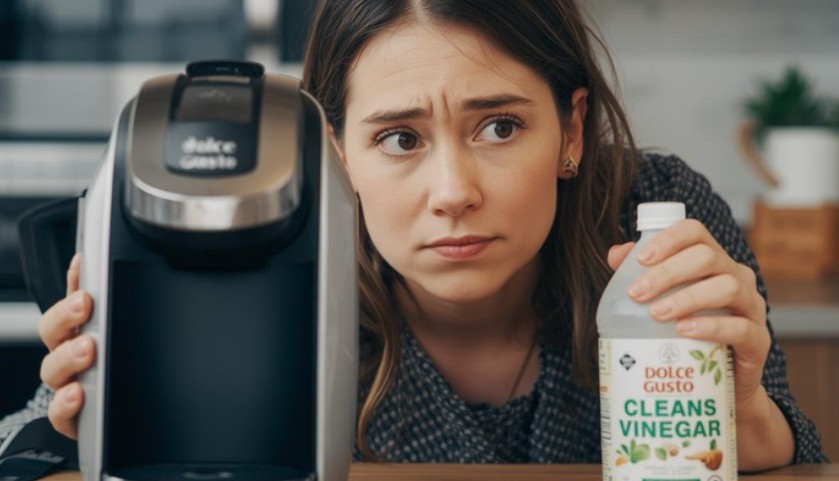
Safe Vinegar Alternatives for Surface Cleaning
While the internal pipes should be a vinegar-free zone, this DIY hero is still useful for the exterior of your machine:
- Drip Tray: Soak the plastic tray in vinegar and warm water for 15 minutes to remove milk residue.
- Exterior Buff: Use a microfibre cloth and a tiny amount of vinegar to remove finger marks from the chrome or plastic casing.
What are the FAQ about Can I clean my Dolce Gusto with vinegar?
1. Will using vinegar void my warranty?
In most cases, yes. If a technician identifies that the internal seals have been corroded by non-approved chemicals like acetic acid, your manufacturer’s warranty will likely be voided.
2. How many times do I need to rinse if I already used vinegar?
If you have already used vinegar, don’t panic. Run at least 6 full tanks of water through the machine (3 hot, 3 cold). If the coffee still smells slightly sour, continue rinsing. The smell is a sign that acid residue is still present.
3. What is the best alternative to white vinegar?
The best alternative is a dedicated descaling liquid containing lactic acid. If you are in a pinch, citric acid powder is safer for the seals than vinegar, but still not as effective as professional solutions.

Home Diagnostics and Technical Standards Specialist at Hello Mag. She provides high-level Expertise in appliance mechanics and scientific pest management, ensuring every guide follows strict safety protocols and manufacturer standards. As a leading Authority on technical home specs, Kanimozhi audits complex data to provide homeowners with the most accurate, verified, and reliable diagnostic solutions available.
0 Comments