
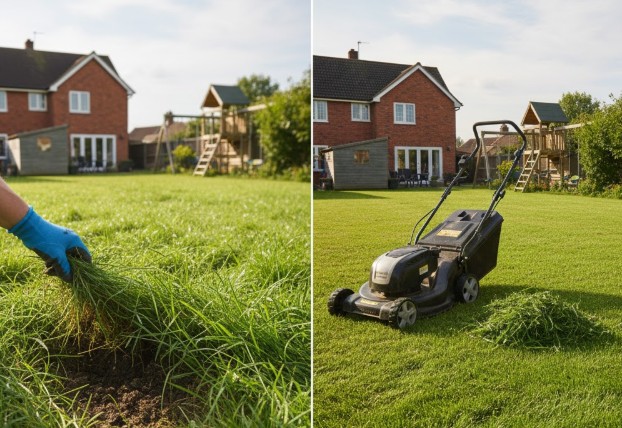
You have spent weeks—perhaps even months—preparing the ground, choosing the right seed or turf, and watching those first delicate green shoots emerge. It is a moment of pride for any UK homeowner.
However, that pride often turns into procrastination. You might be worried that the grass is too fragile, or perhaps a typical British rainy spell has kept you off the garden for a week too long.
Suddenly, you realise your “carpet” of green has turned into a shaggy, uneven meadow. If you are asking yourself if you’ve waited too long, the answer usually lies in the height of the blade.
What is The Science of Why “Waiting” is the Enemy?
Before we dive into the rescue steps, it is vital to understand why height matters. When you wait too long to mow new grass, two things happen:
- Hormonal Shift: Grass plants produce a hormone called auxin at the tip of the blade. This hormone encourages vertical growth. When you cut the tip, the plant sends signals to the base to start “tillering” (producing side shoots). Delaying the cut keeps the plant thin and spindly.
- Crown Shading: The “crown” is the base of the plant where growth originates. If the top growth is too long, it blocks sunlight from the crown, leading to a yellow, weak base that is susceptible to moss and disease.
Here are the 4 essential steps to saving your lawn if you’ve let it grow too long.
Waiting Too Long to Mow New Grass? – 4 Steps to Avoid Damage
Step 1: The Root Stability “Tug Test”
Before you even wheel the mower out of the shed, you must ensure the lawn can handle the physical stress. New grass—especially from seed—is easily uprooted by the suction of a mower or the weight of your footsteps.
How to perform the test:
Find a few different patches of grass across your lawn. Firmly grasp a small clump of blades and give them a steady, upward tug.
- If the grass stays put: The roots have “knitted” into the soil. You are safe to mow.
- If the grass (or the turf layer) lifts: Stop immediately. The roots are not yet established. If your grass is already too long but fails this test, you must wait another 3–5 days for root development, regardless of the height.
Step 2: Equipment Prep – Why Blunt Blades Kill New Lawns?
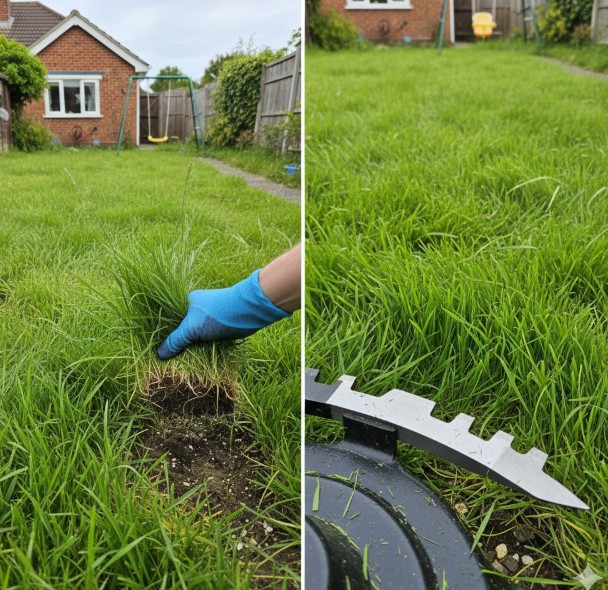
For an established lawn, a slightly dull blade is a nuisance; for a new lawn, it is a death sentence. New grass is succulent and full of moisture. A blunt blade won’t “slice” the grass; it will “tear” it.
How Is The Dangers of Tearing?
- Bruising: Tearing causes white, frayed ends on the grass blades. This looks unsightly (a silvery-grey sheen across the lawn) and causes the plant to lose moisture rapidly.
- Disease Entry: Frayed ends are open wounds, making your new lawn a primary target for Red Thread or Leaf Spot—common UK lawn diseases.
Action: Ensure your mower blades are professionally sharpened or replaced before the first cut. If you use a rotary mower, ensure the underside of the deck is clean to allow for maximum airflow.
Step 3: Applying the “One-Third Rule” (The Rescue Strategy)
This is where most DIY enthusiasts go wrong. If your grass has reached 12cm and you want it at 4cm, do not cut it all at once. Removing more than one-third of the leaf surface at once causes “root shock,” where the plant stops growing roots entirely to focus on repairing the leaf.
What Is The Staged Recovery Plan?
- The First Pass: Set your mower to its highest possible setting. Aim to only take off the very tips (the top 25–30%).
- The 48-Hour Rule: Wait two days. This allows the plant to recover and the “yellowed” base of the grass to be exposed to sunlight.
- The Second Pass: Lower the blades by one notch and mow again.
- Repeat: Continue this every 3–4 days until you reach your target height.
UK Grass Species Height Comparison Table
Knowing your grass type helps you determine the “safe” height for that first delayed cut.
| Grass Type | Common in UK? | Ideal First Cut Height | Maintenance Height |
| Perennial Ryegrass | Yes (Hardwearing) | 5cm – 6cm | 2.5cm – 4cm |
| Fine Fescues | Yes (Ornamental) | 6cm – 7cm | 3cm – 5cm |
| Meadow Grass | Yes (Self-repairing) | 5cm | 3cm |
Step 4: Post-Mow Recovery & Aftercare
Once you have successfully reduced the height of your overgrown grass, your work isn’t quite done. The lawn will be stressed and will need specific care to recover its sward density.
- Hydration: Mowing is a “wounding” process. If the weather is dry, give the lawn a light watering in the evening after the cut to help the plants rehydrate.
- Avoid Heavy Feeding: Do not apply a high-nitrogen “Spring/Summer” fertiliser immediately after a heavy cut-back. The grass is already working hard to repair itself; forcing rapid top growth with chemicals can lead to “lush” growth that attracts pests like leatherjackets.
- Clear the Debris: If the grass was very long, your mower might leave clumps of “hay” behind. Always bag or rake up these clippings on a new lawn. Leaving them will smother the young plants and lead to rot.
Comparison: Seed vs. Turf (What are the Strategic Differences?)
While “waiting too long” is a risk for both, the consequences differ:
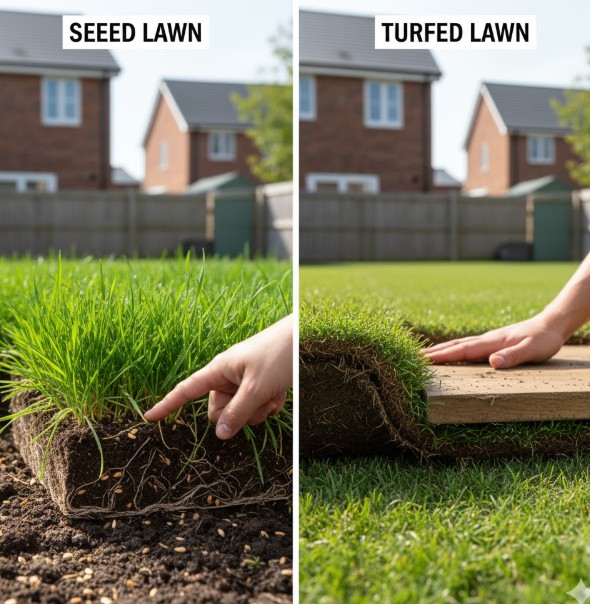
- For Seeded Lawns: The risk is thinning. If you wait too long, the grass becomes “leggy.” Once you finally cut it, you’ll see bare soil between the plants. You may need to “overseed” in autumn to fix the density.
- For Turfed Lawns: The risk is compaction. Turf is often laid on heavy soil. If the grass gets too long, you spend more time walking on it to manage it, which can compact the soil and prevent the turf roots from penetrating the ground.
Conclusion: What Is The Mow High, Mow Often Mantra?
Waiting too long to mow new grass is a hurdle, but it is one you can overcome with patience. By following the 4 steps—testing root stability, ensuring sharp blades, respecting the one-third rule, and providing gentle aftercare—you can transform that overgrown mess back into a healthy, dense UK lawn.
The secret to a perfect lawn isn’t how low you can go, but how consistently you care for it. Moving forward, aim to mow whenever the grass is 2cm taller than your desired height
What are the FAQ about Waiting Too Long to Mow New Grass?
1. What if my grass is flopping over because it’s so long?
This is a sign the grass is starving for light at the base. You must mow it immediately using the “highest setting” mentioned in Step 3. If you leave it “flopped,” the grass underneath will die, creating circular dead patches.
2. Can I use a robotic mower on new grass?
Robotic mowers are excellent for maintenance because they cut tiny amounts frequently. However, if the grass is already too long, a robot mower will struggle and likely “mulch” the grass into a thick paste that smothers the lawn. Use a manual mower to get it back to height first.
3. Should I bag the clippings or leave them?
On a new lawn, always bag them. You want as much sunlight and airflow as possible to reach the soil surface to encourage new shoots to emerge from the base.

Home Diagnostics and Technical Standards Specialist at Hello Mag. She provides high-level Expertise in appliance mechanics and scientific pest management, ensuring every guide follows strict safety protocols and manufacturer standards. As a leading Authority on technical home specs, Kanimozhi audits complex data to provide homeowners with the most accurate, verified, and reliable diagnostic solutions available.
0 Comments