
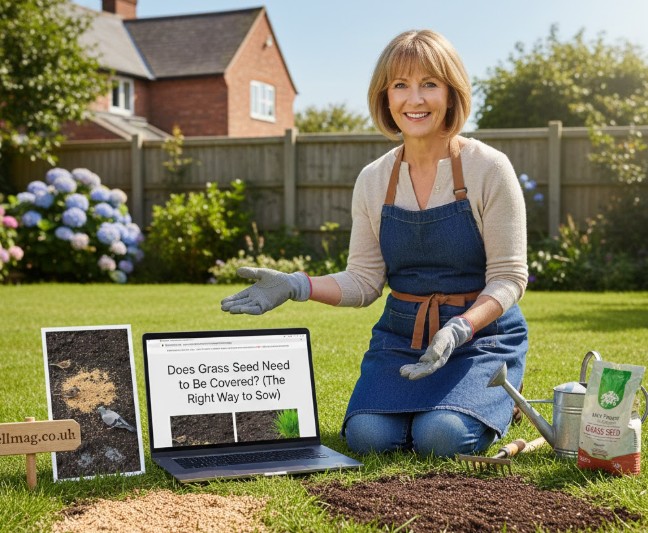
- Should You Cover Grass Seed With Soil?
- What Happens if You Don’t Cover Grass Seed?
- What are Best Ways to Cover Grass Seed (Without Overdoing It)?
- What are the Common Mistakes to Avoid When Covering Grass Seed?
- Final Verdict — Should You Cover Grass Seed or Not?
- What are the FAQs About Does Grass Seed Need to Be Covered?
Quick Answer: Does Grass Seed Need to Be Covered With Soil?
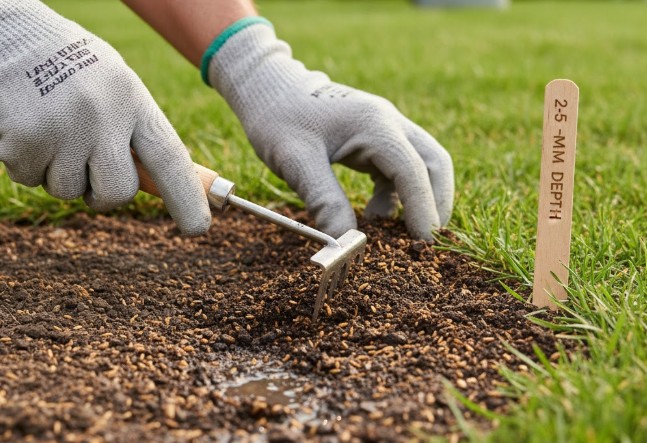
Yes, but only lightly. For the best results, grass seed should be covered with 2–5mm of fine topsoil or compost.
- Why: It improves seed-to-soil contact, retains moisture, and protects the seed from birds and wind.
- The Risk: Burying seed deeper than 5mm can prevent it from germinating as it lacks access to light and oxygen.
Pro Tip: If you aren’t adding soil, use a rake to gently work the seed into the surface for better “soil contact.”
If you’re sowing a new lawn or overseeding patches in your garden, you’re probably wondering: does grass seed need to be covered? It’s a common question among UK homeowners and weekend gardeners — and thankfully, the answer is quite straightforward.
Let’s dive into whether you should cover grass seed with soil, what happens if you don’t, and how to do it the right way.
Should You Cover Grass Seed With Soil?
Yes — lightly covering grass seed with soil is generally recommended if you want stronger, healthier germination. But here’s the catch: it’s all about light coverage, not deep burial.
When you apply a small layer of topsoil or compost (around 2–5mm thick), you:
- Improve seed-to-soil contact, which is vital for germination.
- Help retain moisture, giving seeds the hydration they need.
- Protect seeds from birds and surface runoff (especially in the UK’s rainy climate).
Important: You don’t have to bury the seed, but you do need to press it lightly into the soil or dust a thin layer on top — otherwise, your results might be patchy or poor.
What Happens if You Don’t Cover Grass Seed?
It’s possible to grow grass without covering the seed, but in the UK’s outdoor conditions, that’s often a gamble. Here’s what can go wrong:
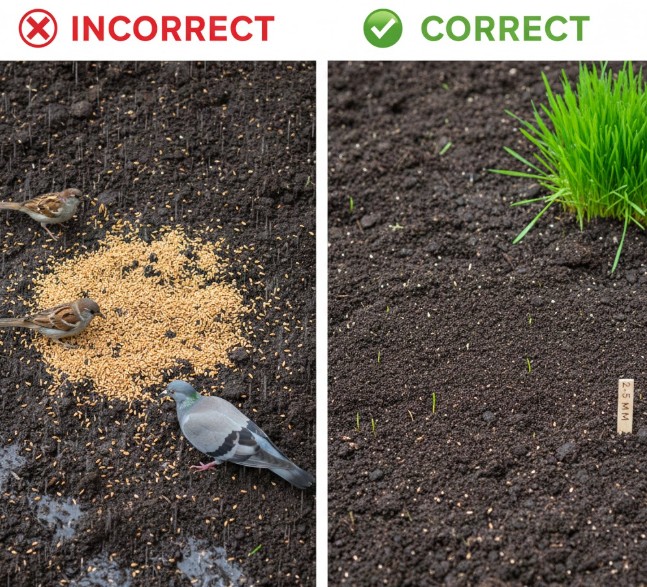
- Birds eat the seed — it’s a free buffet when left exposed
- Wind can blow it away, especially in open or elevated gardens
- Rain can wash it off the surface, leaving bare patches
- Seed fails to root properly without enough soil contact
In short: Exposed seed might grow, but not reliably.
What are Best Ways to Cover Grass Seed (Without Overdoing It)?
When it comes to covering grass seed, a light touch goes a long way. You want to protect the seed, not suffocate it.
Here’s a handy comparison table:
| Method | Coverage Depth | Best For | Avoid If |
| Light topsoil dusting | 2–5 mm | General protection & moisture | Topsoil is clumpy or compacted |
| Rake-in method | Mixed into surface | Overseeding existing lawns | Soil is too hard or dry |
| Straw or mulch layer | Very thin layer | Protection from birds & drying | Mulch is thick or weed-prone |
Pro Tip: Use seed-starting compost or screened topsoil. Avoid thick layers that block sunlight or hold too much water.
What are the Common Mistakes to Avoid When Covering Grass Seed?
Even a well-intentioned gardener can make these slip-ups:
- Burying seeds too deep — they won’t get enough light or air
- Using heavy topsoil that compacts easily and traps moisture
- Overwatering after sowing, which can wash seed away
- Skipping soil preparation, leading to poor contact and patchy results
Remember, grass seed isn’t like flower bulbs — it needs the right balance of coverage, air, moisture, and warmth.
Final Verdict — Should You Cover Grass Seed or Not?
Yes, you should cover grass seed — but only lightly.
A shallow dusting of soil or a gentle rake-in helps lock in moisture, keeps birds off, and ensures proper seed-to-soil contact for strong germination.
For best results in the UK climate, keep it simple: prep the ground, sow the seed, lightly cover, and keep it moist.
A little covering now can save you from a patchy lawn later.
What are the FAQs About Does Grass Seed Need to Be Covered?
1. Can you grow grass seed on top of soil without covering it?
Yes, but success is less consistent. Moisture evaporates faster and birds are more likely to eat it.
2. How much soil should cover grass seed?
No more than 5 mm — just enough to hold it in place and protect it without blocking sunlight.
3. What’s better — soil or mulch for covering?
A fine layer of topsoil is ideal. Mulch (like straw or paper-based products) can help in large open areas or sloped gardens where bird activity is high.

Home Diagnostics and Technical Standards Specialist at Hello Mag. She provides high-level Expertise in appliance mechanics and scientific pest management, ensuring every guide follows strict safety protocols and manufacturer standards. As a leading Authority on technical home specs, Kanimozhi audits complex data to provide homeowners with the most accurate, verified, and reliable diagnostic solutions available.
0 Comments