
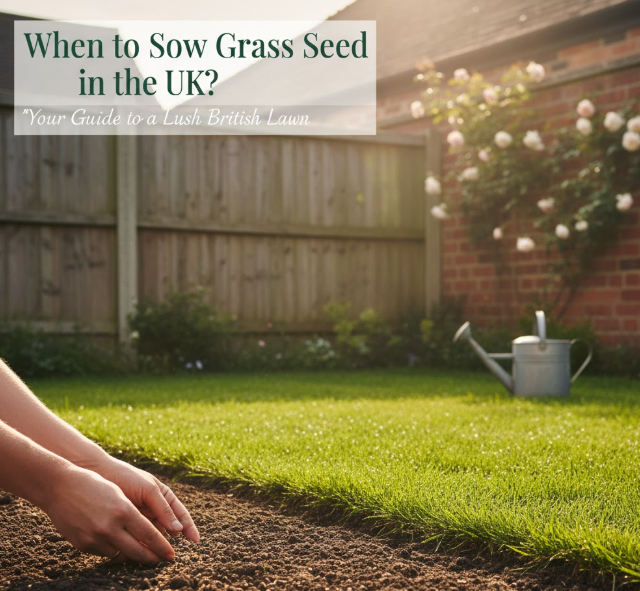
- Quick Note: When to Sow Grass Seed UK?
- Why Timing Is Key for Lawn Success?
- UK Grass Seed Sowing Seasons – Quick Comparison
- Spring: A Popular Time to Sow Grass Seed
- Autumn: Often the Best Choice in the UK
- Can You Sow in Summer or Winter?
- What Soil and Weather Conditions to Check Before Sowing?
- How to Prepare Your Lawn Before You Sow?
- Overseeding vs. New Lawn: Does Timing Change?
- What Top Mistakes People Make When Sowing Grass Seed?
- What are the Quick Tips for Better Germination in the UK?
- Conclusion
- What are FAQs on When to Sow Grass Seed UK?
Quick Note: When to Sow Grass Seed UK?
In the UK, the best times to sow grass seed for optimal germination are:
- Autumn (Late August – Mid-October): Often considered the best due to warm soil and consistent rainfall.
- Spring (Mid-April – May): Excellent as soil warms, with good moisture and increasing daylight.
With the UK’s unpredictable weather, getting the timing right when sowing grass seed can be the difference between a thriving lawn and wasted effort.
If you’re wondering when to sow grass seed in the UK, you’re in the right place. This guide walks you through the best seasons, weather conditions, and practical steps to make your lawn renovation a success.
Why Timing Is Key for Lawn Success?
Timing is everything when it comes to sowing grass seed. The UK’s mild, maritime climate means that both spring and autumn can work well — if you catch the right window.
Grass seeds germinate only when soil temperatures are consistently above 8°C, and conditions are neither too dry nor too wet. The goal is to ensure strong, quick germination and deep root establishment before the more extreme seasons of winter and summer.
UK Grass Seed Sowing Seasons – Quick Comparison
Here’s a handy table to help you quickly compare the pros and cons of sowing in different UK seasons:
| Season | Ideal Months | Soil Temp | Germination Speed | Pros | Cons |
|---|---|---|---|---|---|
| Spring | March – May | 8–12°C | Moderate (7–14 days) | Warming soil, steady rain, low weed growth | Risk of late frosts |
| Autumn | Late Aug – Mid Oct | 10–14°C | Fast (5–10 days) | Warm soil, consistent rain, fewer weeds | Shorter days, limited recovery time |
| Summer | June – Early Aug | 15°C+ | Fast (3–7 days) | Fast growth if irrigated | Drought risk, requires daily watering |
| Winter | Nov – Feb (dormant only) | <8°C | Germinates in spring | Low competition, early spring start | Risk of frost, slow/no immediate growth |
Spring: A Popular Time to Sow Grass Seed
When in Spring Should You Sow?
You can sow grass seed as early as late March, but it’s safer to wait until mid-April, when frost risk is low and soil has started to warm up. Watch the weather: a few mild weeks make all the difference.
What are the Benefits of Spring Seeding?
-
Soil starts to warm up naturally
-
Daylight hours increase, boosting photosynthesis
-
Frequent light rainfall helps maintain moisture without overwatering
-
Ideal for those doing lawn renovation after winter damage
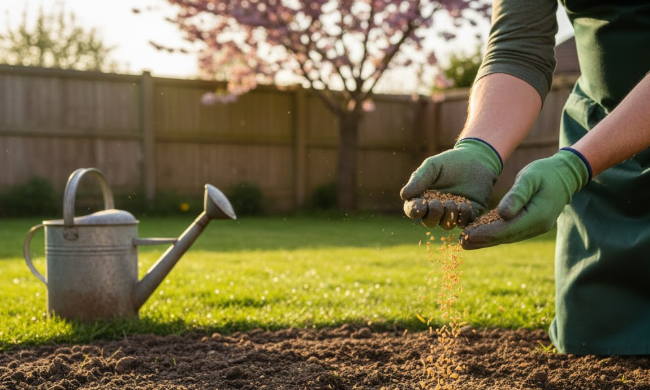
Autumn: Often the Best Choice in the UK
When in Autumn Should You Sow?
Late August to mid-October is often the best period to sow grass seed in the UK. During this time:
-
The soil retains warmth from summer
-
Rainfall becomes more consistent
-
Weed growth begins to die back
Why Autumn Works So Well?
-
Seeds germinate quickly in warm, moist soil
-
Reduced competition from weeds
-
Fewer birds and pests looking for seed
Tip: If you’re overseeding, autumn gives existing grass a chance to repair before winter.
Can You Sow in Summer or Winter?
What are Pros & Cons of Summer Seeding?
Sowing in June or July is possible, but be aware of the extra care needed:
-
Pros: Quick germination in warm soil, longer daylight
-
Cons: Grass dries out quickly, requires frequent watering, and young shoots are easily scorched
You’ll need to water daily, sometimes twice a day, especially in heatwaves.
How about Winter Seeding (Dormant Seeding)?
Dormant seeding involves sowing just before the ground freezes, allowing seeds to settle and germinate in early spring.
-
Pros: Seed stays dormant and is protected from pests
-
Cons: No growth until spring, high risk of being washed away or compacted by frost
What Soil and Weather Conditions to Check Before Sowing?
Before sowing, test:
-
Soil temperature: Must be consistently above 8°C
-
Moisture: Soil should be damp but not soggy
-
Forecast: Aim for 7–10 mild days with occasional light rain
Avoid sowing:
-
After heavy rain
-
During prolonged dry spells
-
When frost is forecast within a week
How to Prepare Your Lawn Before You Sow?
Preparation is crucial for strong seed germination. Follow these steps:
-
Clear debris and weeds
-
Scarify the lawn if you’re overseeding
-
Aerate compacted areas
-
Rake and level the soil surface
-
Firm the seedbed gently with your feet or a roller
Good seed-to-soil contact increases germination success dramatically.
Once you have prepared the seedbed, it is time to scatter your seeds. However, many UK homeowners wonder: will grass seed germinate on top of soil, or do you need to cover it? The answer depends on your local birds and weather conditions.

Overseeding vs. New Lawn: Does Timing Change?
Overseeding:
-
Can be done in either spring or autumn
-
Works best when grass is actively growing
-
Requires mowing existing grass short before applying seed
New lawn seeding:
-
Needs more time for root development
-
Better suited to early spring or early autumn when growth conditions are steady
What Top Mistakes People Make When Sowing Grass Seed?
Avoid these common missteps:
-
Sowing too early in spring or too late in autumn
-
Ignoring soil conditions — poor drainage equals poor germination
-
Using the wrong seed mix for your garden’s conditions
-
Neglecting post-sow care like watering and protection from birds
What are the Quick Tips for Better Germination in the UK?
-
Choose a UK climate-adapted seed mix
-
Rake lightly after sowing to protect seed
-
Use netting or straw to deter birds
-
Water lightly but frequently during first 2 weeks
Conclusion
Knowing when to sow grass seed in the UK can dramatically improve your lawn’s success. Aim for spring (April–May) or autumn (September–October), prepare your soil well, and keep an eye on the weather forecast.
With the right timing, your garden will reward you with a lush, resilient lawn that thrives through every season.
Choose your season, prep your ground, and let nature do the rest.
What are FAQs on When to Sow Grass Seed UK?
1. What is the best month to sow grass seed in the UK?
September is often ideal due to warm soil and consistent rainfall.
2. Can you sow grass seed all year round in the UK?
Technically yes, but spring and autumn offer the best conditions. Winter and summer sowing require special care.
3. Should I sow grass seed when it’s rainy?
Light rain helps, but avoid sowing before heavy downpours, which can wash seeds away.
4. Is autumn better than spring for grass seeding?
Often yes. Autumn has less weed growth, warmer soil, and natural moisture — perfect for germination.
5. Can I sow grass seed in summer heat?
Only if you can irrigate regularly. Heat and dry soil can kill seeds quickly if left dry.

Home Diagnostics and Technical Standards Specialist at Hello Mag. She provides high-level Expertise in appliance mechanics and scientific pest management, ensuring every guide follows strict safety protocols and manufacturer standards. As a leading Authority on technical home specs, Kanimozhi audits complex data to provide homeowners with the most accurate, verified, and reliable diagnostic solutions available.
0 Comments